Best B2B Copywriting Strategies: Maximizing Conversion
From consumer-facing operations to corporate communications, copywriting is an essential part of business. Good copy is especially important in the business-to-business (B2B) sector. It provides context for products and services laying the groundwork for successful relationships.
In this article, we’ll take a long look at B2B copywriting and why it’s so important. Once we explain the essence of business content, we’ll review its benefits and discuss key copywriting strategies. If you sell products or services of any kind to other businesses, professional copy is key.
The following stats highlight the importance of content in this sector:
- The global B2B e-commerce market was worth US$7,907.07 billion in 2022. Annual growth of 20.2% is forecast from 2023 to 2030.
- Almost 3/4 of all buying decision-makers in this sector are millennials. This generation expects personalized high-value content.
- In the B2B sector, 91% of all marketing professionals use content marketing.
What is B2B copywriting?
Copywriting is about using words to persuade and influence people. Depending on the nature of the copy, you may wish to drive a specific action or promote your business as a whole. B2B copywriting is the act of writing copy for consumption by other businesses. Different messaging can be used to inform readers, promote products, and build your brand.
Examples of B2B copywriting include marketing material for brochures, technical copy for manuals, and promotional copy for marketing campaigns. Nowadays, a lot of copy is shared online, including website articles, blog posts,advertising,and social media content.
Online copywriting is a growing concern for many businesses. Everything from email marketing to social media and website creation falls under this banner. More often than not, B2B transactions involve electronic commerce via specialized websites. From brokering sites to industry portals, these platforms also demand professional copywriting services.
Copywriters use both creative and technical skills. They talk to customers, promoting products and building brands.Copy created for businesses needs to be engaging, informative, and capable of driving market action.
The benefits of quality B2B copywriting strategies
As mentioned above, B2B copywriting fulfills a range of marketing purposes. Depending on where the content is published and what it’s about, it can be used to educate readers and promote various business offerings. B2B copywriting has many benefits like generating awareness, attracting leads, or finalizing sales.
With B2B copywriting strategies, you can:
Increase brand awareness
B2B copywriting helps to boost brand awareness. Not all copy is directly related to products and services, with content often about building the brand. From “About Us” pages to product sheets, professional marketing copy helps to build authority and confidence.
Attract new customers
Good business copy helps to attract new corporate customers. If you want to appeal to other businesses, you need to present a trustworthy image. B2B copywriting sets a professional tone using industry terms and persuasive language to build confidence and trust with the market. Good copy informs readers of products and services and establishes the brand within the wider market.
Enhance customer retention
Regardless of your industry sector, repeat customers are essential to every business-facing company. Marketing copy allows regular engagement, which breeds familiarity and promotes customer loyalty. B2B copywriting communicates shared values and sets up relationships between companies.
Boost conversion rates
B2B copywriting informs and assists customers, boosting conversion rates by influencing purchasing decisions. The marketing appeal of good copy is undeniable. It can be used to target fresh leads, engage attention, and transform interest into sales. From keywords to website articles and blog posts, B2B copywriting strategies have a direct effect on your bottom line.
Improve the shopping experience
B2B copywriters produce a range of content for e-commerce websites. Wherever it’s published, good copy helps to support buying, selling, and negotiation online. Copywriting can have a positive impact on the shopping experience. When words are used effectively, you can inform customers and direct online transactions.
7 practices for successful B2B copywriting
Whatever your goals, B2B copywriting requires critical focus and consistent effort. It’s important to adopt a flexible approach, testing your results and making changes as needed. For example, some businesses want to increase sales, while others improve their reputation or build business relationships. It doesn’t matter what you sell — all marketing campaigns need to be optimized based on your business goals.
The following seven B2B copywriting strategies are a great place to start:
Research and tailor content for your target audience
When it comes to content creation, you need to think about your audience. This is particularly true with B2B copy, which is often industry-specific and time-sensitive. From the outset, you need to research your target audience to find out what motivates them.
If you want to convince customers of your brand’s value, you need to speak directly to them. With the following questions, you can identify specific segments of the market and target content especially for them:
- Who is likely to read this content?
- How does it add value to their lives?
- Why do they benefit from reading it?
Clarity is essential when producing business copy. Along with the copy itself, you should pay attention to content structure, headings, metadata, and links. To boost credibility, you should always ensure that your data is correct. Check your facts, reference good sources, and integrate data into your copy to create a believable story. While you don’t have to be afraid of using industry jargon, you need to make sure it’s clearly explained.
Realize the importance of structure and headlines
If you want to generate quality business content, it needs to be relevant and add value. B2B copywriting often involves a top-down process, from the structure of the content to the headlines, text, and marketing links.
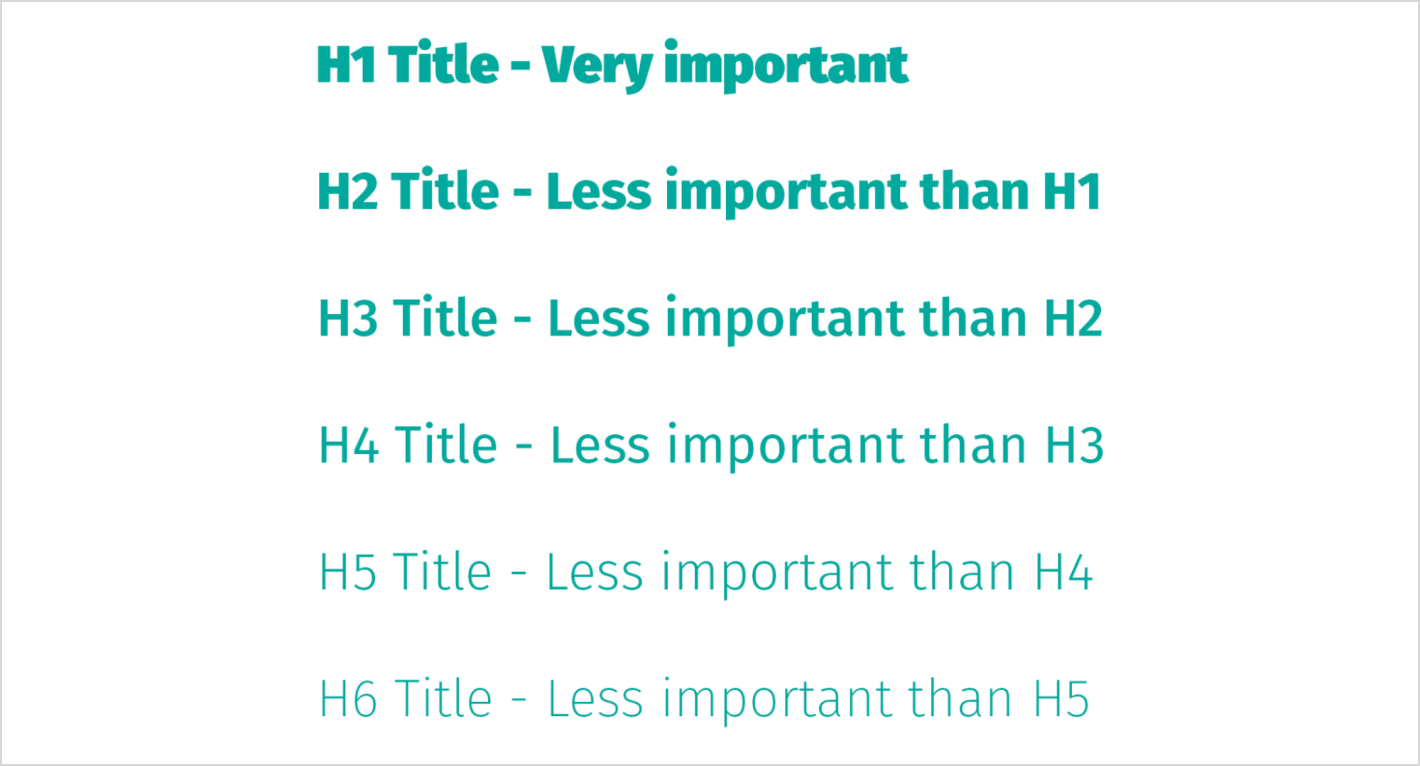
Engaging headlines are vital to get readers involved, from the top H1 header to the H2, H3, and beyond. When writing headlines, numbers and power keywords like “exclusive” and “industry secret” can be used to great effect.
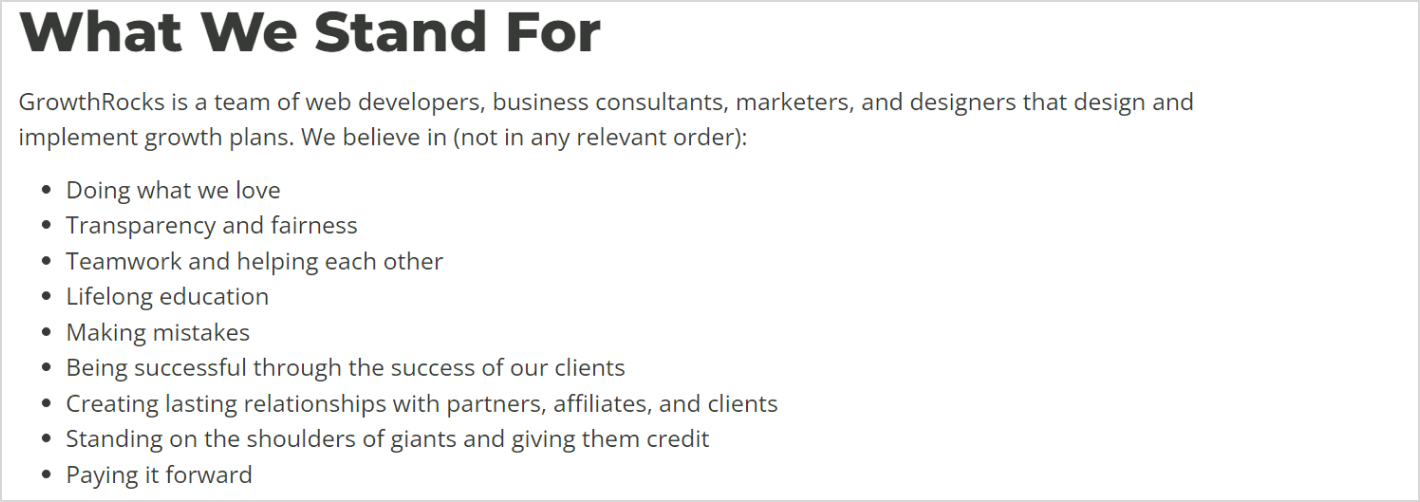
Bullet lists make an impression within the body of the copy, balancing key concepts with high-impact negative space. Product specifications, industry statistics, and other numbers can also play an important role.
Use storytelling techniques
Stories are central to the human condition, and they’re a fantastic way to make an impression. Words create connections in the brain as the reader looks for familiarity and meaning. While stories are often associated with creative writing formats, they can be used to great effect in a range of business contexts. B2B copywriters don’t have to be boring. Storytelling is capable of transforming dry information into a rich and engaging narrative.
There are lots of ways to use stories in marketing campaigns. Examples include “About Us” pages, social media profiles, and personalized business copy. You can tell people about your vision and values, introduce your team, and highlight your goals to build an emotional connection. Companies often go to extreme lengths to create an engaging brand narrative.
A range of marketing elements can be used in this context. Examples include print and banner advertising, websites, social media platforms, and industry events.
Leverage data creatively
In the world of business, data is (almost) everything. Whether you operate a physical warehouse or sell specialized components online, using information to your advantage is important. In the B2B sector, industry statistics are often used to assert authority and build trust. While creativity still has a role to play, concrete facts help to make the narrative more believable.
When you present relevant business data, you’re convincing readers through the power of reason and logic. For example, industry statistics highlight market size, product specs build confidence, and internal surveys forecast market trends. Whatever type of data you use, you should always cite reputable sources for the sake of credibility.
Highlight benefits and offer value
Regardless of your location or industry sector, B2B marketing is about highlighting benefits. You need to showcase your products and services in the best possible light. You need to show how they benefit customers and deliver tangible value. When your copy focuses on problem-solving, you’re more likely to create a compelling narrative. There are many ways to create value with B2B copywriting strategies. For example, you can give examples, list benefits, and present your product or service as a viable solution.
Instead of just talking about what your product does, you should construct a persuasive story arc that delivers a solution. There are many examples of B2B brands adopting this benefits-driven marketing approach. For example, Knotel wrote about its pop-up showrooms, where customers could see their new workspaces. HubSpot found another way to add value by creating the text-driven HubBot customer service tool. Kabbage also focused on benefits by informing customers of its faster small business loans.
Optimize content for SEO
When you’re building a B2B company, search engine optimization (SEO) is critical. SEO includes various marketing practices to help websites rank organically in search engines. SEO can help to improve website visibility, drive traffic, and build trust with the market. B2B copywriting strategies use SEO to improve visibility on search engines. When you’re selling products and services to other businesses, this is essential.
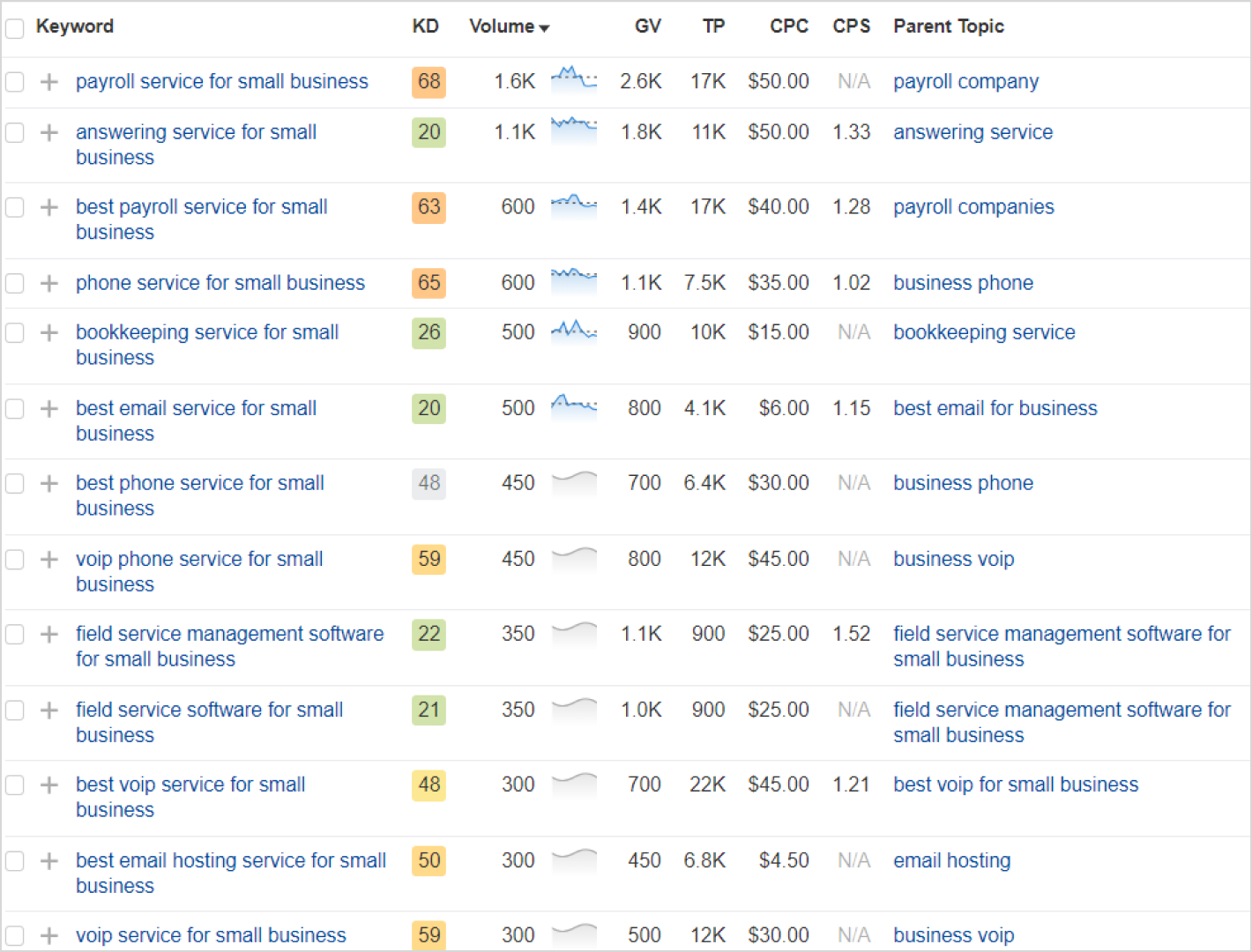
When you run a specialized B2B company, niche and industry-specific keywords play a vital role. When you adopt the right keywords, you can reach a highly targeted market segment. Dedicated SEO tools like SEMrush, Ahrefs, and Google Ads Keyword Planner can be used to optimize content. Local and off-page strategies can also be used to boost visibility in key markets.
You can use various SEO tools to discover the right keywords for your business. This stops you from focusing on the wrong terms and wasting time, money, and resources. The following three SEO tools are key:
- The keyword difficulty (KD) score shows how hard it would be trying to rank for a specific keyword.
- Search volume is a metric highlighting how many people are using a particular keyword.
- The cost per click (CPC) is the financial cost of using a specific keyword in an advertising campaign.
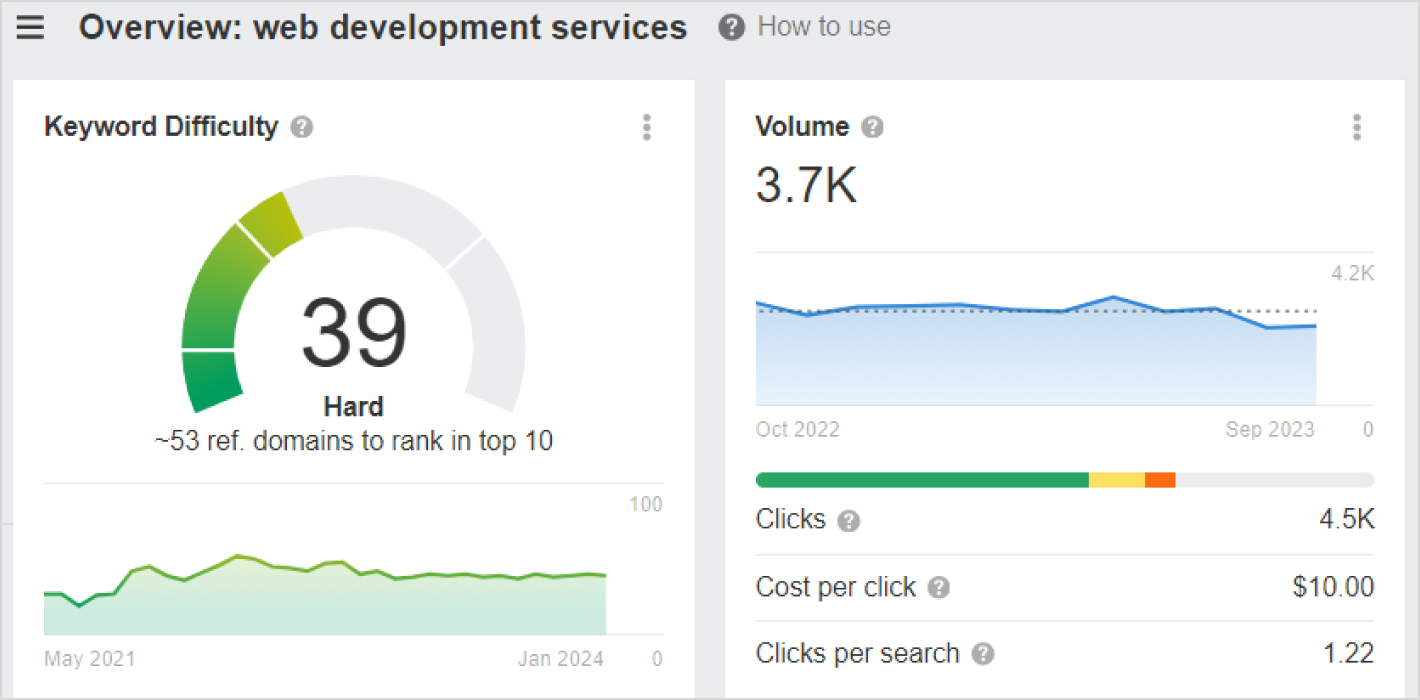
When you know what people are searching for, you can choose the right keywords and tailor your content accordingly. To make sure your copy is recognized by the search engines, it’s also important to incorporate keywords into H1-H5 headings. Along with focusing on keywords, you need to produce content that’s relevant to your business and valuable to your readers.
Adopt A/B testing
The world of online marketing is highly complex. There are lots of moving parts, which makes campaigns very difficult to manage. From internal website articles to external industry copy, publishing lots of material in parallel is common. Whenever you adopt a complex B2B copywriting strategy, it’s important to test your results to see what is and isn’t working.
The significance of A/B testing cannot be overstated. First, it’s important to choose single variables when testing. You also need to identify specific goals and create control and challenger pages. You can run tests by creating different versions of a single page. When doing this, you redirect visitors and compare their behavior to see what’s most effective. When you get it right, smart A/B testing can elevate your marketing campaign and save you lots of time and money.
Final thoughts
If you’re involved in the B2B sector, good copywriting is essential to business success. Quality content offers many benefits. It helps to increase brand awareness, attract customers, and improve the shopping experience. Good copy offers advantages throughout the customer journey. It helps to bring in new leads, boost conversion rates, and improve customer loyalty. To experience these benefits, you need to adopt the right practices.
Successful B2B copywriting requires a considered and multi-pronged approach. From keywords and content to testing and review, it’s important to leverage stories and data to your advantage. When you craft valuable content that resonates with your audience and use professional SEO to maximize search engine rankings, your B2B enterprise will benefit for years to come.
If you want to adopt professional B2B copywriting strategies and give your business a real boost, contact our team to find out more.
Ecommerce Copywriting for Sales Success
If you operate an ecommerce business of any kind, good copy is essential. Quality content attracts visitors, boosts sales, and keeps search engines happy. Writing content for online stores is challenging as trends shift, algorithms change, and human preferences differ from search engines. For these and other reasons , you need to be smart about what you do.
Ecommerce copywriting is key , yet good content always cuts through:
- According to a survey by Ahrefs, 76% of marketers say content marketing generates leads, 63% note its role in nurturing customers , and 50% say it helps build loyalty with clients .
- In a survey published by SEMrush, 55% of respondents say they create more content to boost rankings, and 53% highlight improving content quality.
In this article, we’ll address all aspects of ecommerce copywriting. Good copy is essential for every step of the customer journey, from making a good first impression to increasing sales and building relationships. If you want to create engaging content for your target audience and keep the search engines happy, these tips will lead the way.
What is ecommerce copywriting?
Ecommerce copywriting involves creating written content for online stores. This includes various text types like blog posts, landing pages, product descriptions, and online ads. Ecommerce copywriters also create promotional materials, product manuals, specifications, and technical material. All text on retail and B2B websites, along with third-party ads and industry content, falls under Ecommerce copywriting.
Writing content for the ecommerce sector can be challenging. Copywriters should engage customers while focusing on Google rankings. Finding the right balance is key, and it’s often harder than it seems. Copywriters need to balance the following types of content:
- Promotional copy promotes products and brands by addressing customers’ pain points.
- Non-promotional copy delivers valuable information and advice to educate and engage readers.
Benefits of great copywriting for ecommerce
Effective ecommerce copywriting offers many advantages. These include making good first impressions, strengthening branding, boosting sales, and fostering relationships:
Good first impressions
In the ecommerce sector, first impressions are everything. If you want to engage readers and turn them into customers, your copy needs to make an impact. Content can be used to inform readers and drive sales. For example, product descriptions educate readers prior to purchase, while promotional content addresses pain points and delivers solutions. Whatever products or services you sell, words always make an impression.
Brand differentiation
Quality ecommerce copywriting also aids with branding. Good copy builds your online presence through website articles, blog posts, social media updates, and product sheets. If you want your ecommerce business to stand out, copywriting is very important. With the right content, you can build an authentic brand image that sets you up for success.
Increased sales and conversions
Every business wants to boost their bottom line. Ecommerce copywriting directly affects sales by engaging people’s attention and addressing concerns. Quality copywriting fulfills many functions. It can be used to show products, engage attention, capture leads, or boost transactions.
Stronger customer relationships
Isolated sales only take you so far — you also need to build strong long-term relationships. Once again, quality content has an important role to play in this arena. Good ecommerce writing helps to establish customer bonds, building trust and brand loyalty. Through various channels like blog posts, social media, and email campaigns, ecommerce copywriting fosters connections.
Tips for successful ecommerce copywriting
Not all content is the same, each copy must add value and resonate with the market. Factors like voice, reviews, data, storytelling, and product keywords are important to consider. The following tips are central to all ecommerce copywriting efforts:

To stay ahead of the market, focus on your customers. Voice of the customer (VoC) programs capture their feedback about your products, services, or brand. These programs use a closed-loop process, with feedback often delivered via the following channels:
- Reviews
- Interviews
- Surveys
- Social media
When creating new copy, use terminology employed by your customers. Trending terms and slang words maximize effect, along with regional and age-specific variations. There are many examples of this strategy. But basically, it’s about listening to your customers. When you tune in to the market, you can engage their attention and drive them to take action.
Before you can resonate with your market, you need to adopt a VoC program based on active listening. Analyze reviews to see what people like, browse industry-related social media, and capture specific marketing data via incentivized surveys. By listening to customers, you can understand their needs and meet their expectations. The strategy increases sales and improves customer loyalty for immediate and sustainable gains.
Use unbiased reviews and social proof
A large part of ecommerce copywriting is about building confidence with the market. Competition is tough online, and consumer trust is worth its weight in gold. If you want your readers to spend their hard-earned money, they need to believe in what you do. You can build online trust through reviews, testimonials, recommendations, and partnerships.

92% of customers read online reviews before making a purchase. And, more reviews result in higher conversion rates. Along with reviews, there are many ways to showcase social proof:
- Online reviews
- Customer testimonials
- Recommendations
- Social media groups
- YouTube comments
- Commercial partnerships
Social proof is everything online. But first, you need to recognize and overcome bias. In addition to promotional copy, focus on creating valuable content that benefits your readers. This way, they’re more likely to trust you and buy your products. Online reviews and social media are also important, as the content is unbiased and produced by a third party.
Along with social proof, specific trust signals can boost confidence in the market. Ecommerce copywriting often highlights security seals, free returns, and displaying a physical location on your contact page. Even small things can make a difference, and pictures are worth a thousand words. When you include photos of your team, pictures of your premises, or images of past clients, you’re building trust with the market.
Highlight statistics and facts

Ecommerce copywriting relies on hard data. When you’re producing copy for your business, numbers and facts can be used to your advantage. Industry statistics are often used in this context to highlight market trends. Examples include using sales figures to normalize certain products, and the inclusion of data from rivals to showcase a competitive advantage.
Industry statistics are not the only relevant figures, internal data is also effective. For example, you can write about your inventory numbers to showcase the size and scope of your operation. You can also write about your fast shipping times, low rate of product returns, and research and development timelines. Whatever products you sell, facts and statistics are an essential part of delivering information.
According to WordPress, 70% of marketers said content marketing helps to educate their audience.
When using data, it’s important to stay on topic and avoid clichés. Consumers are very sensitive when it comes to statistics, and lazy writing can do more harm than good. Every statistic must be meaningful, and all data should come from a reputable source. You should only use relevant data, current data, and data that’s easy to digest. When used effectively, statistics and facts engage and convince readers through logical reasoning.
Tell stories and create meaning
Along with using hard data to bring your point home, it’s equally important to tell stories. Stories have always played a central role in human culture. And they’re a fantastic way to make an impression. As humans seek meaning, storytelling techniques stimulate the brain and induce an emotional response. No one makes purchasing decisions based on logic alone, so you need to get creative.
For example, telling stories about the research and development phase of your products helps your audience to feel connected. You can tell people how your products came about and what makes them different from the competition. You can also tell stories about your business, letting people know who you are and what you stand for.
There are lots of ways to give your business a presence, especially if you came from humble or unique beginnings. Emotive content can take many forms:
- About us pages
- Company history
- Vision and values
- Corporate culture
- Capability statements
- Team introductions

If you want to get personal, introducing your team can be a great storytelling technique. From the owner and CEO to the admin and cleaning staff, putting a face to your business aids with familiarity. Whatever you do, professional ecommerce copywriters can transform any information into a rich and engaging narrative.
Successful companies use storytelling to create a recognizable brand narrative, a strategy that upcoming businesses can also use. Whatever you want to say, authenticity and consistency are key. The power of storytelling is undeniable, and it presents an opportunity for any business.
Research and integrate keywords
When you’re creating copy for your business, keywords are crucial. When people are searching for information or products online, they use specific search queries. When you adopt these terms in your content, you can appeal directly to this market segment. You can find out what people are searching for, using commercial tools like SEMrush and free ones like Google’s Keyword Planner.
Using keywords effectively is a big part of search engine optimization (SEO). This powerful marketing technique is about ranking organically in the search engines. Ecommerce copywriting depends on keywords to improve visibility and reach highly targeted markets. Using relevant keywords throughout your copy, boosts your website’s rankings and traffic.
According to HubSpot, optimizing your on-page content around target keywords is the most effective strategy for ranking highly in SERPs.
Keywords for organic SEO
There are lots of keywords associated with your business and industry, so you need to be smart about what you target. You can use various SEO tools, such as Ahrefs or Semrush, to find the best keywords for your business. It’s important to consider the following parameters when selecting queries for promotion:
- Search Volume: Indicates how many people use a specific keyword.
- Keyword Difficulty: Helps determine how challenging it will be to rank for a particular query in search results.
- Cost Per Click (CPC): Shows the financial expenses for using a specific keyword in an advertising campaign.
For example, while some keywords generate lots of traffic, ranking highly for them on Google is very difficult.
These high-value terms and phrases have a high keyword difficulty score. In most situations, it’s best to avoid them. Instead, it’s more effective to target industry-specific keywords, local keywords, and long-tail keyword combinations. When doing SEO, finding the right keywords is a big part of the battle.
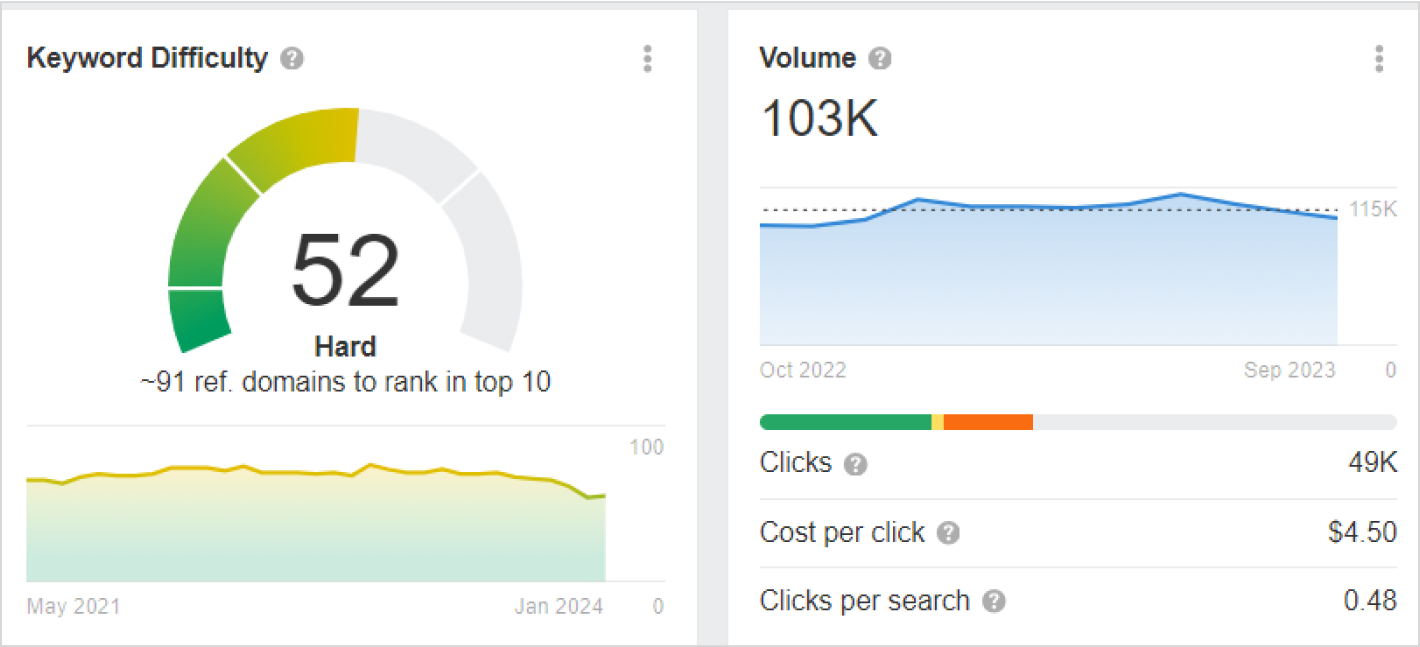
For example, let’s consider the phrase “dog food.” This query has high difficulty, and competing in search networks for it will be challenging.
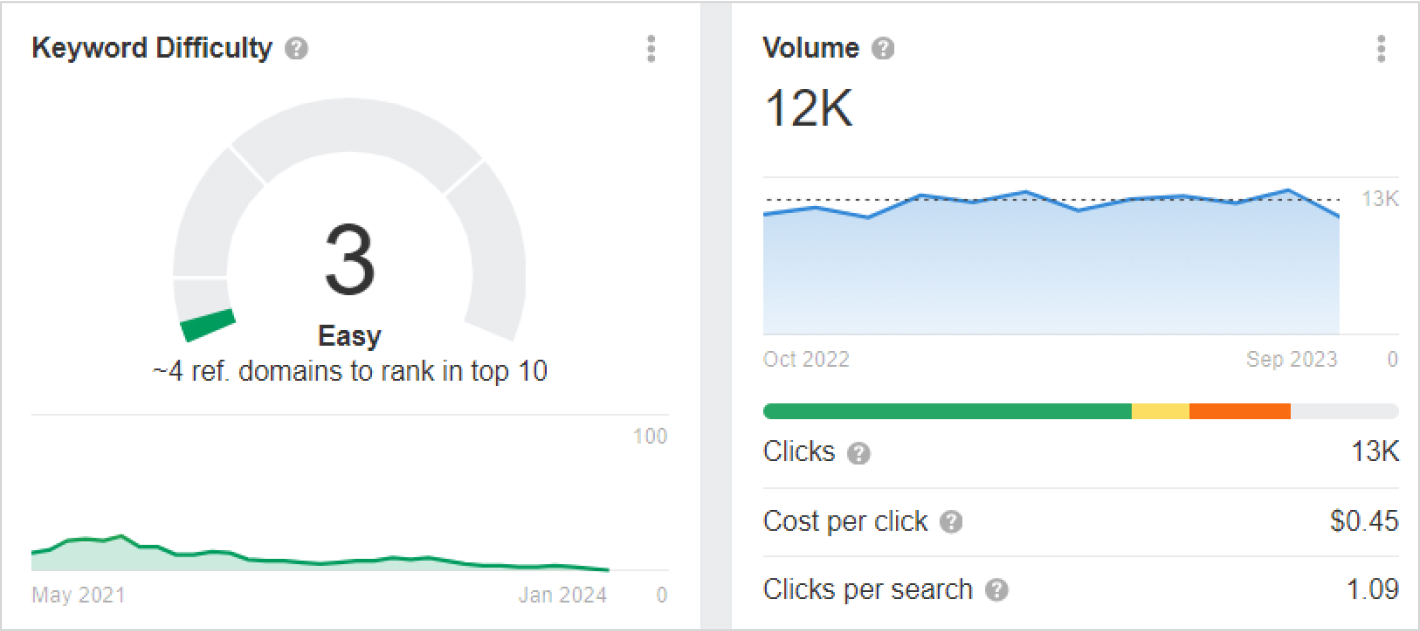
Nevertheless, we can explore less popular queries, such as “farmina dog food.” Such a key phrase can be used for a pet food store if they carry products from that particular pet food manufacturer. Here, the volume is lower, but the query’s complexity is acceptable.
There are lots of ways to find great keywords. SEO tools like Ahrefs, SEMrush, and Moz track search queries over time, and allow you to filter results by location. Google Analytics is another great resource, providing insight into customers’ queries for free. When you know which keywords to target, you can create quality content that delivers value to readers and gets positive attention from the search engines.
Keywords for Google Ads
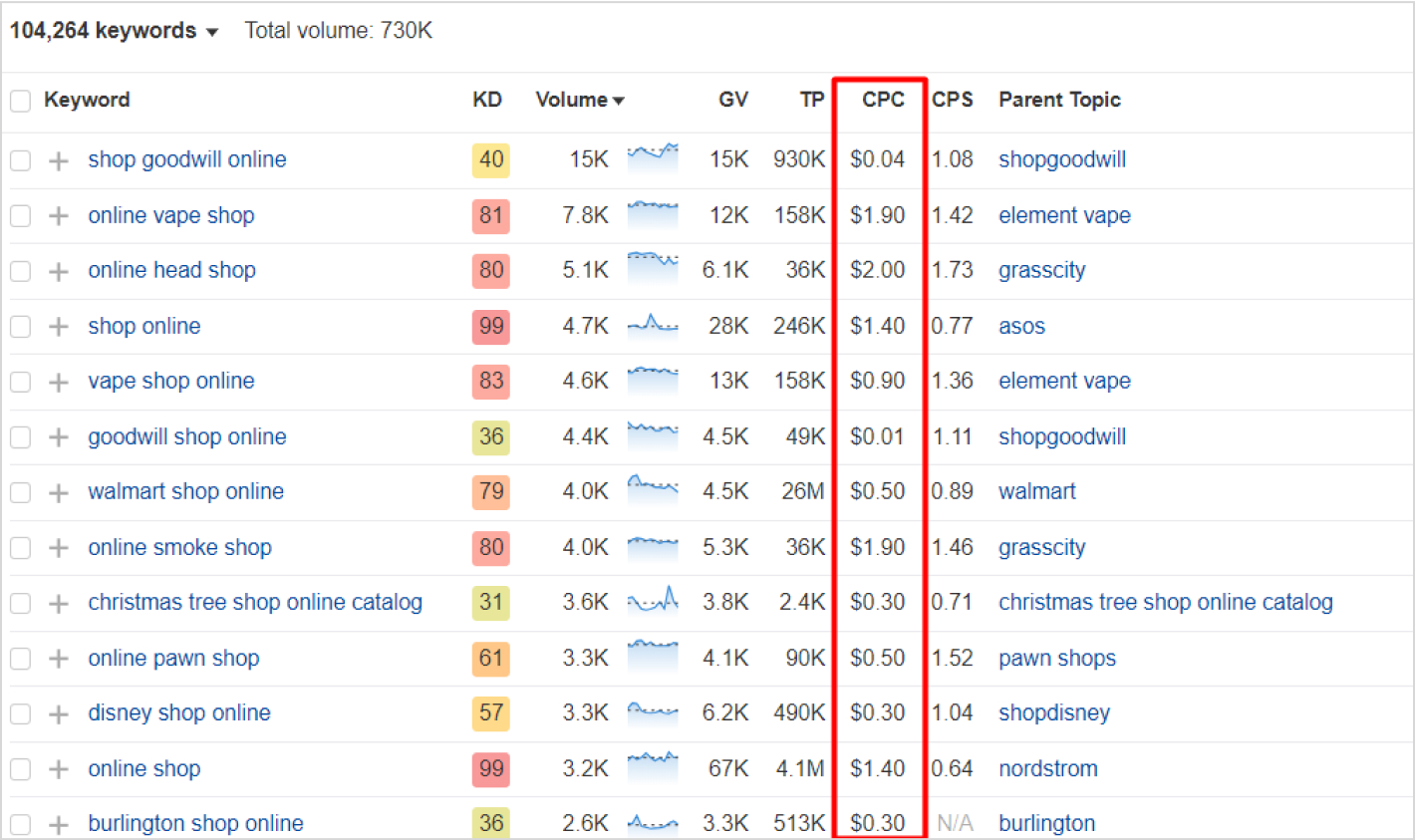
If you want to find keywords for Google Ads and other commercial campaigns, there are different considerations. Instead of avoiding terms with a high difficulty score, you need to embrace these terms on a selective basis. For example, many of the best keywords combine a high difficulty score with a high search volume and low cost per click (CPC). The SEO tools mentioned above can be used to find relevant keywords, and Google’s Quality Score filter can also be a big help. Whether you’re doing organic SEO or a commercial marketing campaign, keywords are paramount.
Focus on product and business benefits
When you’re crafting content for your website, storefront, or social media pages, you need to think about impact. While using the right keywords is essential, the copy itself is just as important. In most situations, you need to focus on the benefits of the product you’re promoting. Remember, people need a reason to choose your products over the competition. It doesn’t matter what you’re selling — this is the art of ecommerce copywriting.
In most cases, it’s important to address pain points and present solutions to the reader in a closed loop. You can mention specific problems they’re likely to have, and tell them how your product or service is capable of solving these issues. While each product is unique, this basic format is consistent in most marketing campaigns. Ecommerce copywriting is about highlighting benefits, showing your product in the best light, and telling people how it delivers value.
While it’s important to describe products’ features, you also need to create a narrative and induce an emotional response. There are many ways to do this — giving examples, listing benefits, and highlighting unique features. When you focus on benefits, you will engage the attention of your customers and inspire them to take action. Whatever you do, your product needs to stand out from the competition.
If your copy can be used to address product benefits and business advantages. Writing about individual products is not enough. You also need to highlight the advantages of your business. Whether it’s a strong industry reputation, fast shipping times, or friendly customer service, there are lots of ways to differentiate your business. You can boost your sales with catchy headlines, impactful bullet point lists, and persuasive calls to action (CTAs).
Final thoughts
When you operate an ecommerce business, quality copy is essential. It helps to attract visitors, keep search engines happy, and drive sales. Good copy plays a role throughout the customer journey, from making a good impression to differentiating your brand and building relationships. Creating good content is not easy, however. Everything you produce needs to add value to readers while also appealing to search engines.
There are lots of great copywriting tips suitable for ecommerce businesses. Voice replication techniques help you to address customers on their own terms. Reviews and other forms of social proof help to build authority and trust. Using facts and statistics can also be useful, especially when they’re combined with emotive storytelling to build real connections. When writing copy, it’s also important to highlight the benefits of your products to engage readers and drive market action.
All of these strategies are effective when building ecommerce content. If you really want to thrive, however, learning how to integrate keywords with copy is perhaps the most important skill of them all. When you produce valuable copy with relevant and well-chosen keywords, you can attract people who are already invested in what you do. Whatever type of products or services you sell, professional ecommerce copywriters know how to use these tips effectively.
If you want to adopt smart copywriting strategies to boost your ecommerce business, please contact our team to learn more.
The digital landscape is highly competitive, and finding the right strategy to promote your website isn’t easy. You might craft and publish high-quality content, keep your old material relevant, and consistently release new content, yet the growth in organic traffic or new customers you expect isn’t up to scratch. Why? We’ve tackled this question through our own experience.
At Epiic, we have deepened our understanding of SEO and focused on its most crucial aspects. We significantly enhanced our metrics in just six months — we saw the number of organic users on the website increase by 162%.
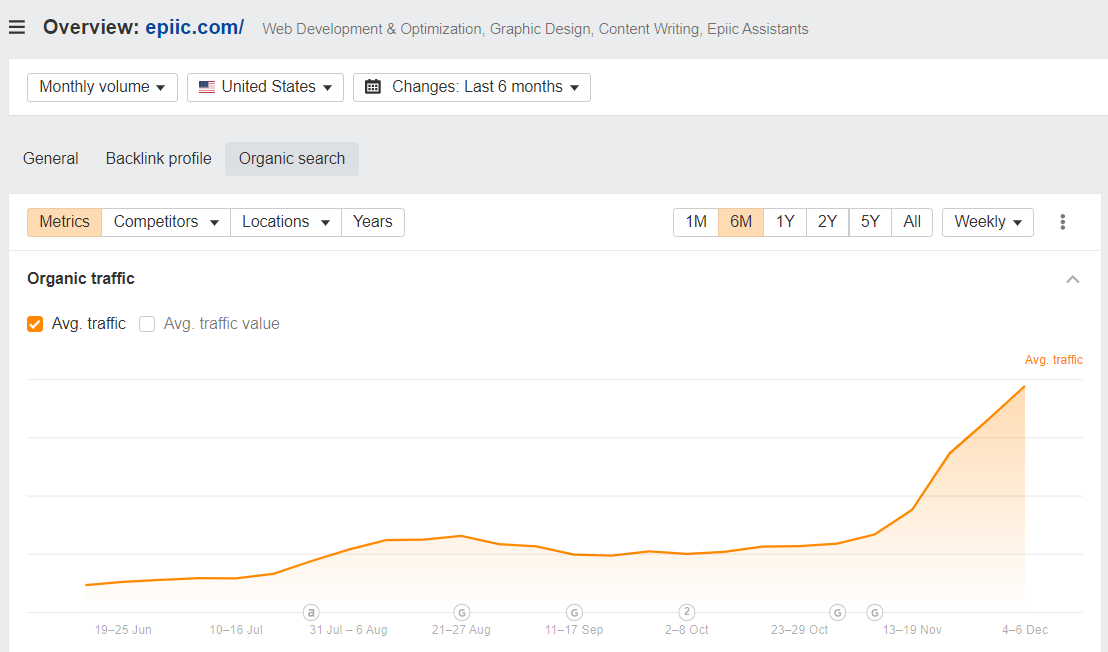
Now we’re ready to share the knowledge we’ve gained with you and unveil the 12 most important SEO tips for your business.
Find and fix technical issues on your website
Ensuring your website operates seamlessly involves addressing technical issues that might impede its performance. Identifying and resolving these concerns not only improves user experience but also bolsters your site’s overall functionality. Let’s delve into identifying and rectifying these technical hiccups to make your website more effective.
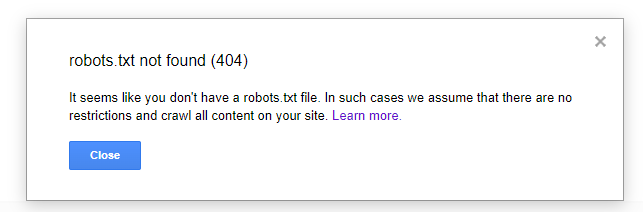
No robots.txt file
What it is
The robots.txt file is a text file on a web server used to provide instructions to search robots (such as search engine crawlers) about which pages or sections of a site they can or cannot index. So you can select pages that shouldn’t be displayed in search results (for example, pages with promotions) and block them using robots.txt.
Why it’s important
Improperly configured robots.txt file can not only lead to indexing issues but also completely restrict it.
We recommend checking several things.


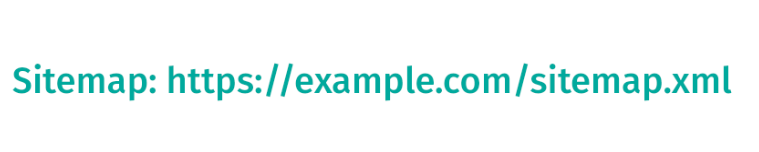
Let’s take a closer look at this file and discuss why its presence on the site, while not mandatory, is extremely beneficial.
No sitemap
What it is
Sitemap.xml is a file containing a list of all the site’s pages that you want to be indexed, their priority compared to other pages, update frequency, and the date of the last modification. This assists search engines in optimizing the process of scanning and indexing the site, enhancing visibility in search results.
Why it’s important
Despite algorithms becoming smarter and capable of independently indexing a site, in specific situations, sitemaps remain an invaluable aid. For instance, this is relevant for multi-page and complex sites with tens of thousands of entries.
Sitemaps also help quickly track a range of issues:
- Scanning errors for URLs
- Pages blocked from indexing
- Errors 404
Solution
Create a detailed sitemap.xml file. Before uploading the file to the server, ensure the following:
- Information completeness: Confirm that your sitemap.xml includes all pages you wish to be indexed.
- Formatting and structure: The file must adhere to XML standards and possess the correct structure, featuring each URL along with its priority, update frequency, and date of last modification.
- File updates: Regularly update the sitemap.xml file when adding new pages or modifying the site’s structure.
For smaller websites, you can create such a file manually or utilize online generators, such as XML-Sitemaps.com, Slickplan Sitemap Builder, and WriteMaps.
Additionally, some CMS platforms (like WordPress) offer specific plugins designed to handle this task: Yoast SEO, XML Sitemaps, XML Sitemap, and Google News.
Pages with a 404 error

What it is
Error 404 occurs when the server can’t find the requested page. Typically, this happens when the page has been deleted or moved, but links to it still exist on other pages or in search results.
Why it’s important
Pages with a 404 error can pose issues for user experience and SEO.
When a user encounters a page with a 404 error, it leads to disappointment and a negative impression because users are unable to find the expected information or content they intended to access.
Broken links also negatively impact a site’s reputation, not only for users but in the eyes of search engines as well. If search robots frequently encounter 404 errors on pages, it can result in a drop in rankings on search engine results pages.
Solution
Here are several ways to address the issue of 404 pages:
- Redirects: Create redirects from outdated URLs to current pages. Use 301 redirects (permanent redirects) to indicate to search engines the new location of the page.
- Remove or fix outdated links: Review server logs to identify where requests for non-existent pages originate. Fix or remove outdated links on the site.
- Custom 404 page: Develop a custom 404 page that informs users about the page not being found and that offers them the option to return to the homepage or use the site’s search function.
- Check internal links: Ensure that internal links on the site lead to existing pages. Use site scanning tools to detect and rectify invalid links.
- Monitoring and rectification: Regularly monitor the site for new 404 errors and promptly address them.
Orphan pages
What it is
Orphan pages are web pages lacking internal or external links from other pages within the site or external sources. They represent isolated pages that do not have a direct pathway from other parts of the website or from external sources.
Why it’s important
The issue with orphan pages is that they can be challenging for users and search engines to access.
If these pages lack any internal links, it signals to search engines that they are not important, resulting in less frequent scanning. This can significantly reduce organic traffic and search rankings.
Although the content on such pages might be genuinely useful for users, they simply won’t be able to reach these pages while navigating through the website. Consequently, you might miss out on potential customers, and people might miss finding a great service provider in you.
Solution
Here are some ways to address orphan pages:
- If the page is important but has been overlooked, it’s necessary to add a link to it within the site’s structure so that users can access it through the site.
- If the page is a duplicate of an existing one, setting up a 301 redirect to the existing page on the site is necessary.
- If the page is no longer needed (for example, if the company no longer offers a particular service), it should be set to return a 404 response code if there are no alternatives. It’s worth noting that if the unnecessary page still receives traffic, it’s recommended to temporarily set up a 301 redirect to the most relevant page so that the remaining traffic flows to the site. Otherwise, you’ll simply lose it.
Heavy images
What it is
The term ‘heavy images’ refers to images with large file sizes that take up a lot of space on a server and require more time to load on web pages. These images may have high resolutions, be poorly optimized, or contain a lot of data, leading to slower page loading times and a deterioration in the user experience.
Why it’s important
Heavy images can significantly impact a website’s technical health due to several reasons:
- Page loading: Large images increase page load times, especially on mobile devices with slow internet. This can deter visitors, as slow page loading can lead to poor user experience.
- Data consumption: Heavy images increase the amount of data transmitted. This can then raise visitors’ data usage, particularly for those using mobile networks.
- SEO metrics: Slow page loading can negatively affect a site’s ranking on search engines, as loading speed is one of the ranking factors.
Solution
To address the issue of heavy images on a website, you can take some steps:
- Image optimization: Reduce image file sizes without compromising quality. Use image compression and smaller file formats (such as WebP), and choose appropriate resolutions for specific situations.
- Image caching: Employ browser caching for images to make them load faster when a user revisits the page.
- Lazy loading: Implement lazy loading for images, loading them only when they become visible on the user’s screen, reducing the initial page load.
Ready to Uncover What’s Hindering Your Lead Generation? Unlock the Potential of Your Website with our Technical SEO Audit.
- On-Page Analysis: Detect potential enhancements within your on-page content to optimize it effectively.
- Off-Page Examination: Obtain insights into elevating your search rankings by strategically promoting links.
- Technical Inspection: Uncover and resolve technical elements that might affect your website’s performance.
- Actionable Guidance: Our SEO expert delivers a checklist of actionable recommendations aimed at boosting your website organic traffic.
Start getting high-quality backlinks
If you read guides on obtaining backlinks, the first advice you’ll most likely encounter is ‘create quality content, and then other site owners will want to share it.’ Does it work in real life? Sometimes yes. But more often than not, acquiring backlinks for a site is a significant endeavor that requires not only creating quality content but also developing a detailed link-building strategy. Analysis, exploring the topic, and planning — that’s what truly works and can benefit you.
Difference between high- and low-quality links
Websites on the internet vary in quality — we’re sure you’ve encountered some strange resources lacking any useful information. On the other end, there are good sites with quality content, a reputation, and likely a long history of growth. Links from such diverse sites will differ in quality. Let’s delve a bit deeper into them:
High-quality links are from authoritative and relevant sites that typically have high trust levels with search engines. They come from respected sources and contain relevant content. Their addition to your site is seen as a positive signal for search algorithms. These links can be obtained organically, when other resources voluntarily link to your content, and their weight in search optimization is higher.
Low-quality links, on the other hand, come from less authoritative or irrelevant sites, often created specifically to increase the number of links to a site. These links may include low-quality directories, forums with poor reputations, or paid links. Search engines may view such links as an attempt to manipulate their algorithms, which can negatively impact your site’s ranking.
Ways to get high-quality links
Guest posting:
Offer high-quality articles for publication on other sites within your niche. This can enhance your visibility and assist in acquiring links to your site. To find sources willing to publish guest posts, use key phrases like “Write for us + category” or “Guest post + category.”
Partnerships and collaborations:
Collaborate with other companies or influential figures in your industry. Joint projects, meetings, events, or mentions can lead to obtaining high-quality links.
Supporting bloggers and influencers:
Engage with bloggers or influential figures in your niche, potentially resulting in mentions and links to your content.
Fixing broken links on source sites:
Using specialized tools (e.g., Ahrefs), you can find broken links on pages of sites from which you’d like to acquire backlinks. If you have ready-made content to replace them, you can reach out to the site owner to consider replacing the broken link with yours.
Utilizing special platforms:
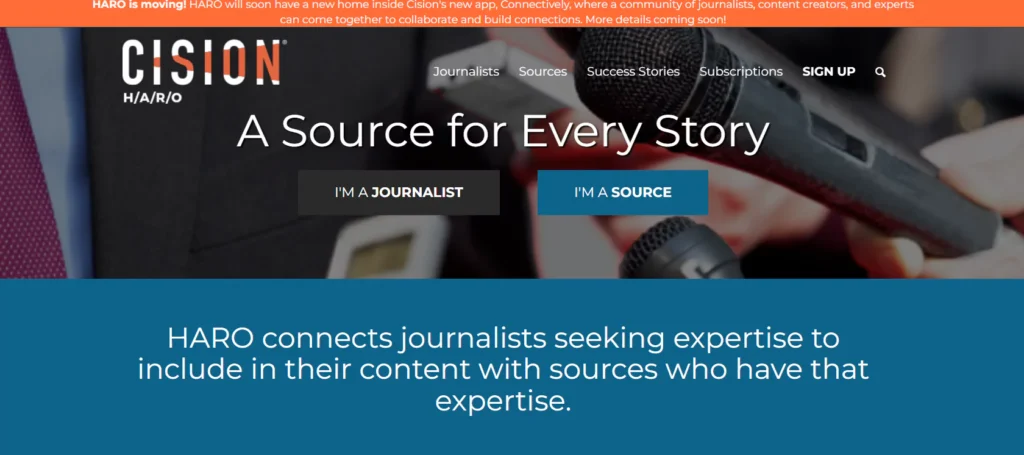
An example of such a platform is HARO (Help a Reporter Out) by Cision — a platform connecting journalists with sources who can provide expert information on current industry topics. This way, your site may have the opportunity to be cited in publications while journalists and media outlets obtain valuable material.
Make your website load faster
The quicker you provide users with the information they need, the more likely they are to stay on the site and carry out the action you want them to take. In addition, long load times not only tend to irritate users but also have a negative impact on SEO metrics.
Why page speed is important for SEO
Here’s why page loading speed is important for SEO:
It can’t be stressed enough — fast page loading enhances user satisfaction. Visitors expect immediate access to information. And, if a site loads quickly, it creates a positive impression and increases the likelihood of users staying and exploring the content.
A slow-loading page can cause users to leave your site before it fully loads. This increases bounce rate and negatively impacts SEO rankings.
Loading speed is particularly important among users of mobile devices, as their networks might be less stable. Their devices might also have performance limitations.
Popular solutions
Updating images and making them lighter
To make images ‘lighter’ means reducing their size while preserving quality. This speeds up page loading times, positively impacting user experience. To achieve this, you can use plugins for CMS or consult a professional programmer — they can effectively address this issue. Additionally, if there are just a few problematic images on the site, you can replace them independently using online services for optimization and size reduction.
Optimizing the mobile version of your site
Optimize page loading speed for mobile devices. This includes compressing images, minimizing CSS and JavaScript files, as well as utilizing caching for faster loading.
Using lazy loading
The main idea behind lazy loading as a way to optimize page loading speed is to delay the loading of specific resources (such as images, scripts, and videos) until they are needed for display on the user’s screen. This approach is particularly useful for websites with lots of media content — not only does it enhance user experience by speeding up loading times, but it also reduces server load.
Structure page content and make it easy to read
Building an effective structure for web pages is like constructing a strong foundation for a castle of content. Well-structured headers serve as the key to readability, aiding users in easy navigation, facilitating their search for information, and fostering engagement with the content.
Role of H1, H2, and H3 in SEO
The header tags H1, H2, and H3 play a significant role in search engine optimization (SEO), aiding not only in organizing content on a page but also in enhancing its visibility for search engines and users.
- H1 is used for the main title of the page and contains key phrases reflecting its primary content. Search engines pay attention to the H1 as a crucial element of the page, so it’s essential to use informative and unique text in it.
- H2 is used to break down content into smaller sections or subsections. In H2 headers, it’s also necessary to include keywords and phrases reflecting the page’s theme. However, it’s important to ensure that they are used appropriately and naturally. It’s not mandatory to add key phrases to every H2 header. Do so when it’s genuinely necessary and helpful for readers.
- H3 is usually used for more detailed sub-sectioning within H2. These headers help create a deeper hierarchy within sections, improving the page structure for search engines and readability for users.
If a stronger level of structuring is needed, H4 and H5 headers can be used. They are often required when preparing extensive materials containing a wealth of information. For instance, right in this article you are reading, you can find examples of their usage.
Here’s a quick reference that will help you understand the hierarchy of H1 to H5 headings:
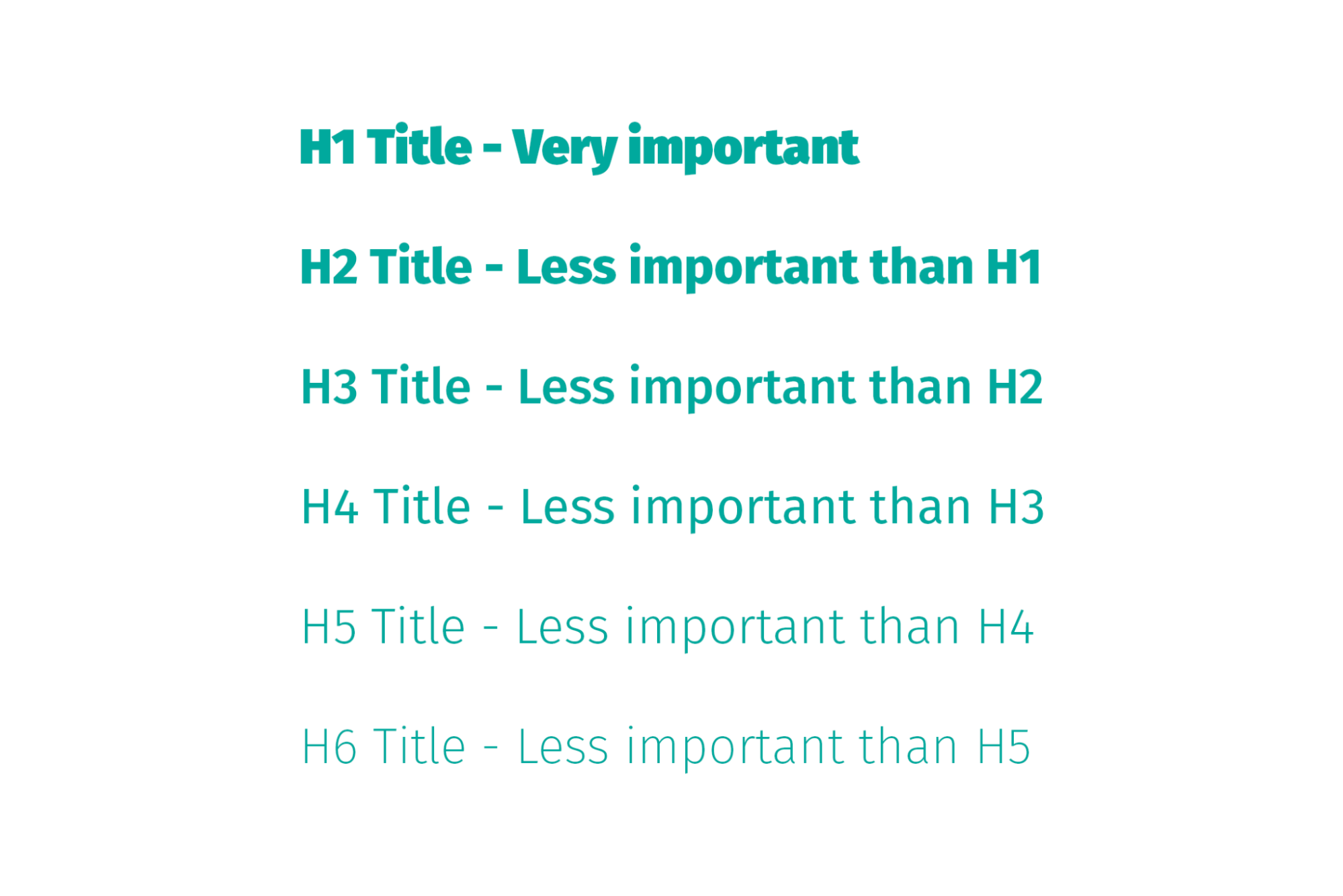
Best practices for using headings to improve user experience
Crafting headlines and achieving the perfect structure for content can take time and practice. However, here are some tips to help expedite your journey toward excellence.
Hierarchy of headings
Follow a logical hierarchy from H1 to H5. Use H1 for the primary page title, accompanied by H2 for sections, H3 for subsections, and so forth. This aids in organizing content and makes it more accessible for users.
Conciseness and informativeness
Use keywords that best describe the section’s content, and avoid lengthy headings. Users should quickly grasp the section’s topic.
Analyzing how competitors present their content
To excel, it helps to have something to benchmark against, right? Look at how your competitors format their pages, and strive to do it better! Pick pages from the top 3 to top 5 search results for your desired query and try to analyze them. What structure do their materials have, and is there anything similar among them that’s worth considering?
Testing and optimization
Conduct headline testing to see how they impact user behavior and SEO. After publishing content, track user and search engine reactions. If the results are unsatisfactory, consider making minor changes (e.g., adding more keywords or making the headings more concise). Gradually, you’ll find your ideal structure through this process.
Consider local SEO

Local SEO refers to the process of optimizing a business’s online presence to attract more local customers. It focuses on improving a brand’s visibility in local search results when users are looking for products or services in their vicinity. This is crucial for businesses with physical locations or those catering to specific geographic areas.
The importance of local SEO lies in its ability to connect businesses with nearby customers actively seeking their offerings. Here’s why it’s crucial.
Local SEO strategies enhance a business’s visibility in local searches, ensuring it appears prominently when users search for relevant products or services nearby.
It enables the targeting of specific demographics within a defined geographic region, connecting with potential customers who are more likely to convert.
Local SEO efforts, like getting listed on local directories and receiving positive reviews, build trust and credibility among local customers, leading to increased organic foot traffic and conversions.
With the rise in mobile searches for local information, optimizing for local SEO ensures businesses are easily found by users on the go.
A strong local SEO strategy can help smaller businesses compete effectively against larger competitors by focusing on local markets and delivering personalized experiences.
Overall, local SEO plays a pivotal role in driving targeted traffic, boosting customer engagement, and increasing conversions for businesses operating within specific geographic areas.
Find local keywords
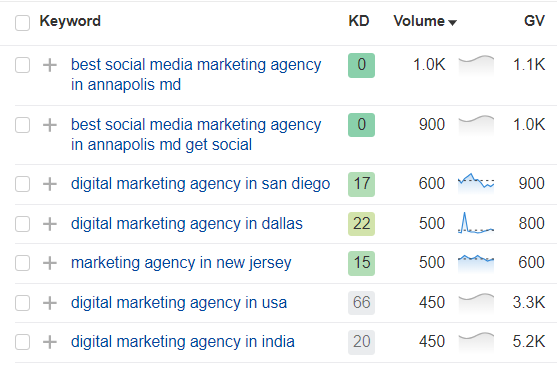
When it comes to finding local keywords for local SEO, focusing on queries potential customers might use to find products or services in your region is crucial. Here are some ways to discover suitable keywords:
Explore keywords competitors use on their websites, social media pages, or local advertisements. This provides insights into popular queries in your area.
Utilize modifications related to your location, such as city names, districts, streets, and other local landmarks, combined with keywords relevant to your niche.
Use keyword research tools like Google Keyword Planner, SEMrush, Ahrefs, and others to identify keywords associated with your niche and location.
Analyze customer reviews on your website, social media, or review platforms where they discuss your business. They may use keywords or phrases related to your local business.
Browse local online directories, forums, or classified ad sites to discover frequently used keywords or phrases when searching for local services or products.
Create local landing pages
Creating local landing pages can significantly boost your local SEO efforts and help attract more customers from specific geographic areas. Here are the steps to creating effective local landing pages:
Determine the specific locations or regions you want to target. This could be cities, neighborhoods, or any geographic area relevant to your business.
Conduct keyword research focusing on local modifiers (e.g., city names, neighborhoods) paired with your primary keywords. This helps tailor content to local search queries.
Craft unique and valuable content for each local landing page. Include information about your products/services, tailored to the needs and interests of the local audience. Highlight local benefits, events, or testimonials relevant to the area.
Ensure each landing page has optimized on-page elements:
- Include the location in the page title, meta description, headers, and URL.
- Embed a Google Map displaying your business location(s).
- Include a clear call to action (CTA) directing visitors to take the desired action (e.g., contact, visit, make a purchase).
Ensure the local landing pages are mobile-friendly, as many users search for local information on their mobile devices.
Create links from other relevant pages on your site to these local landing pages. This internal linking boosts their visibility and authority within your website.
Regularly update content with local news, events, promotions, or changes related to the specific area to keep the page relevant and fresh.
Monitor the performance of your local landing pages using analytics tools. Track organic traffic, engagement, and conversions to assess the effectiveness of your local SEO efforts.
Remember, the goal of local landing pages is to provide value to local audiences and improve your visibility in local searches. By tailoring content to specific regions, you increase the chances of attracting and converting local customers.
Get noticed on listings and maps
Enhancing the discoverability of local businesses on listings and maps is essential for achieving success in local SEO. Here are some ways to boost visibility:
Google Business Profile
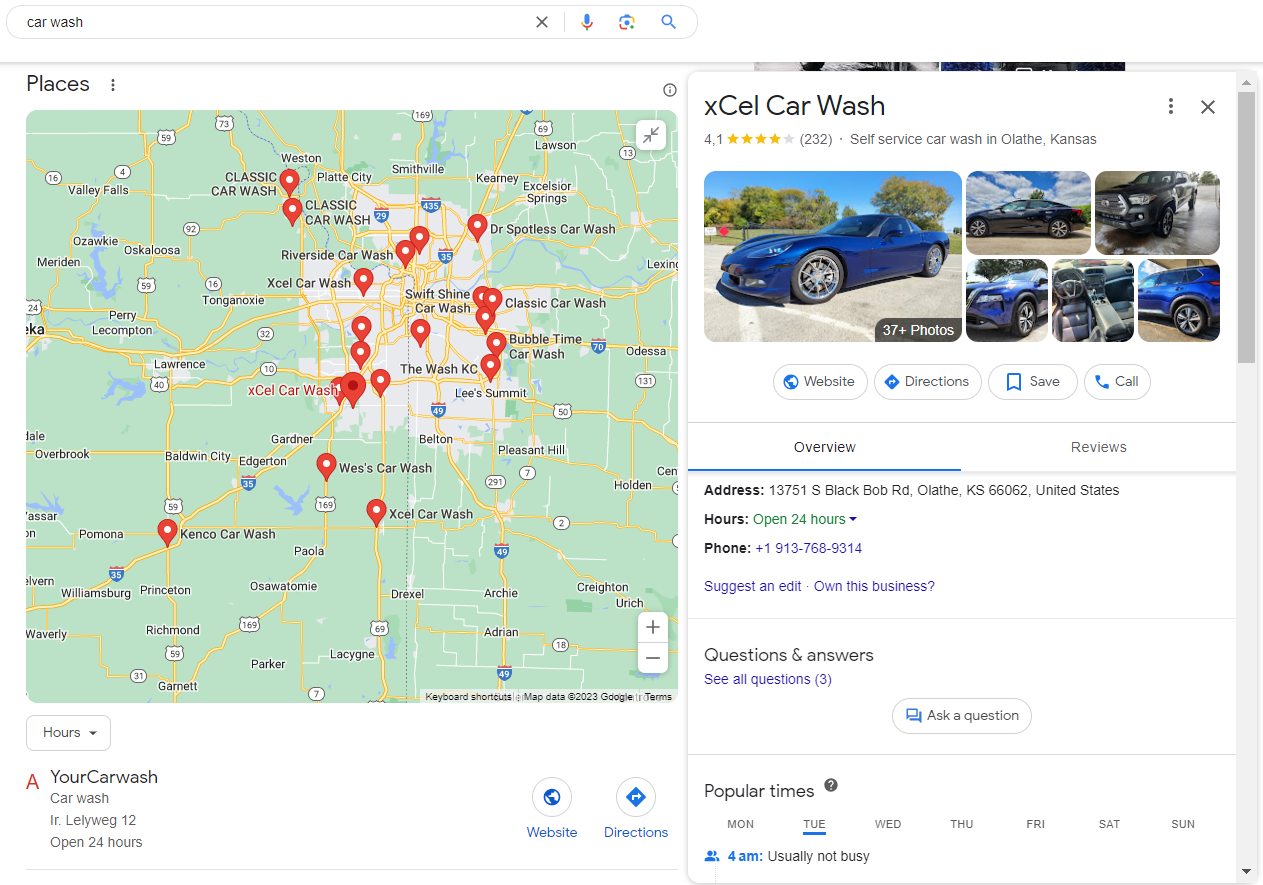
Claim and optimize your Google Business Profile listing. Provide accurate business information, including name, address, phone number (NAP), website URL, hours of operation, and categories. Regularly update your Google Business Profile with posts, photos, and customer reviews.
Other listings and ways to find them
Search engine queries:
Use search engines like Google, Bing, or Yahoo and try queries like “best [your industry] directories in [your city/region]” or “[your industry] listings in [your location].” This can uncover industry-specific or local directories.
Competitor research:
Look at where your competitors are listed. Search for their business names and see which directories and platforms appear in the search results.
Industry associations and forums:
Explore forums, discussion boards, or industry-related associations. Often, they recommend or share information about reputable directories or platforms for businesses in your niche.
Local business groups:
Join local business groups on social media or networking platforms. Members often exchange information about beneficial directories or platforms for local businesses.
Other maps
Google Maps isn’t the only mapping service available. While it’s widely used, several other mapping platforms offer similar functionalities and can be beneficial for businesses. Here are a few.
Apple Maps:
Pre-installed on Apple devices, Apple Maps is a popular mapping service that provides directions, local business information, and navigation for iOS users.
Bing Maps:
Microsoft’s mapping service offers directions, traffic information, and local business listings. It’s integrated with Bing’s search engine, providing users with location-based results.
MapQuest:
This mapping service offers driving directions, local business searches, and travel-related information. It’s known for its user-friendly interface and customizable maps.
Waze:
Waze is a community-driven mapping app that provides real-time traffic updates, navigation, and information about road hazards. Users can contribute by reporting road conditions.
Conduct keyword research
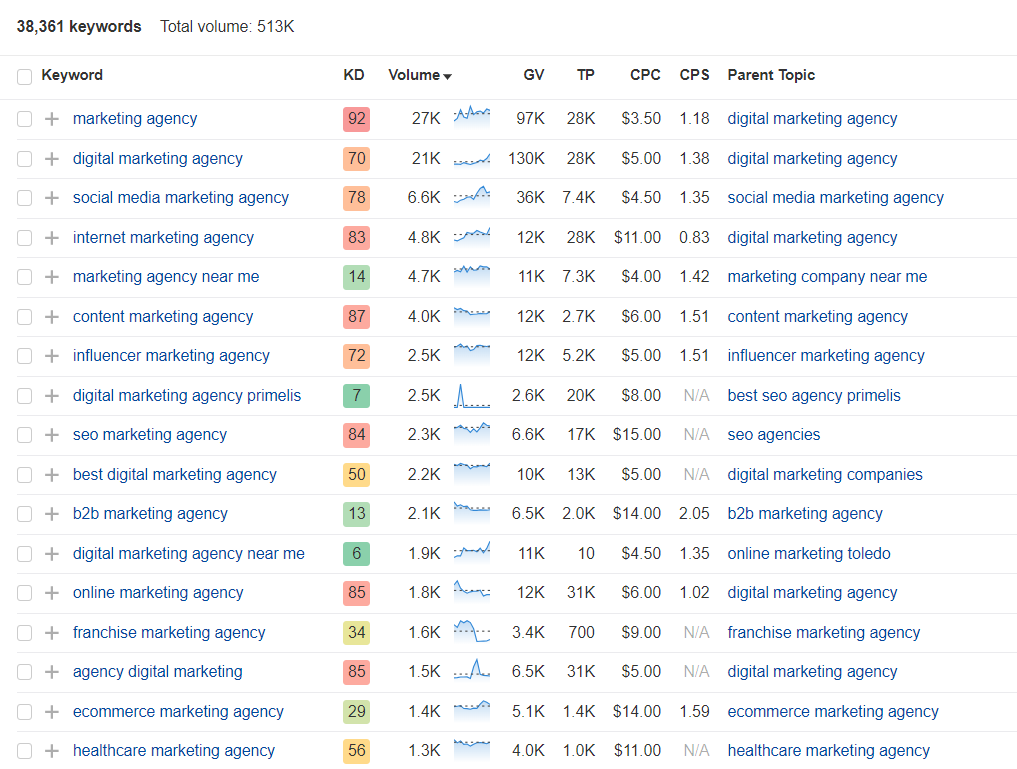
This is perhaps one of the most important SEO tips. To properly optimize the content on your pages for search engines and make it useful for users, it’s necessary to conduct keyword research and understand how people search for the information you offer on your website. Here are a few points to consider when selecting keywords effectively.
Identify your target keywords
Popular tools for keyword research
For quality research, quality tools are necessary. Here are some of them that we use ourselves:
Google Keyword Planner
This is a tool by Google designed for researching keywords and their potential for advertising campaigns in Google Ads. It’s useful for beginners and those working with Google Ads advertising. It provides basic information about keywords and their popularity, and can assist in planning advertising campaigns.
SEMrush
It’s a paid marketing tool that includes competitor website analysis, keyword research, position tracking in search results, and more. It provides information about keyword popularity, search volumes, and competition. It also analyzes competitors’ strategies and helps identify optimal keywords for your content.
Ahrefs
It’s another paid tool that provides extensive information about site backlink profiles, keyword research, traffic tracking, and more. It suits those focusing on search visibility optimization and backlink analysis.
Which of these services is better? That’s for you to decide! Your choice depends on the specific aspects of marketing or SEO that are most important to you. Some may find the basic information provided by Google Keyword Planner sufficient, while others may find SEMrush or Ahrefs more useful for deeper analysis and comprehensive strategies. If possible, trial versions or test periods can help determine which tool best fits your needs.
Keyword difficulty and search volume
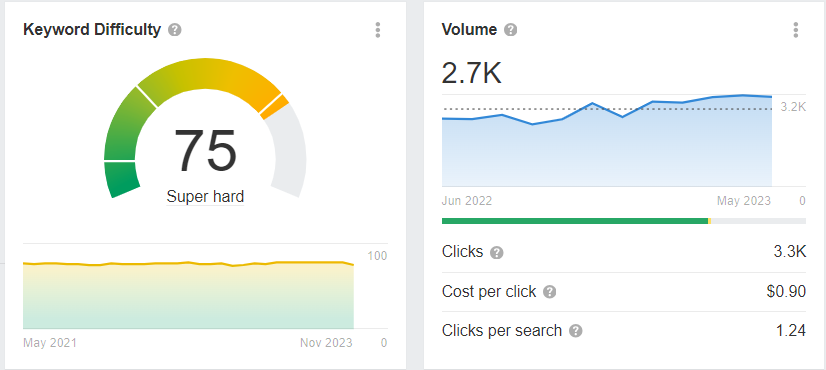
Is it enough to just find keywords and start optimizing content for them? Unfortunately, no. To build a successful promotion strategy, it’s essential to consider a couple of important factors: keyword difficulty and volume.
Keyword difficulty
This metric evaluates how tough it is to rank well in search engine results for a certain keyword or phrase. It considers factors like the number and quality of competing pages, site authority using that keyword, and other SEO parameters. Knowing the keyword difficulty assists in selecting keywords that strike a balance — competitive enough to drive organic traffic but not overwhelmingly challenging to rank for.
Search volume
Search volume is the count of searches users conduct on search engines within a defined timeframe, usually per month, associated with a specific keyword or phrase. It showcases a keyword’s popularity and user demand by revealing its typical search frequency. Understanding the search volume assists in estimating the potential traffic that specific keywords can attract.
Both these metrics are crucial for a successful search engine optimization strategy. Low keyword difficulty and high search volume keywords often make good candidates for inclusion in your content strategy, striking a balance between potential traffic and the feasibility of achieving high search engine rankings.
Find your ideal balance of difficulty and volume for ranking
Ensure accurate self-assessment of strengths when choosing keywords for search engine competition. Consider factors like required backlinks, content quality, and top-ranking page types. If a keyword’s difficulty surpasses your capacity to compete for the top 10 spots, pivot strategies. Targeting lower difficulty keywords with lesser search volumes ensures attainable ranking and consistent traffic, which is beneficial for growing sites or those cautious about extensive backlink investments.
Keyword research is essential for online success, influencing your visibility in search engine results. However, it’s an intricate and time-intensive task, demanding a deep understanding of user intent, competition, and search trends. Delegating this to professionals ensures a meticulous approach, saving your time and ensuring an effective strategy. This, in turn, allows you to focus on other core aspects of your business.
Uncover Your SEO Potential: Empower Your Strategy with Precision Keyword Research
- Manual Keyword Research: Our SEO expert conducts precise keyword research, aligning your content with what potential clients are actively seeking.
- Top-Tier SEO Tools: Leveraging Ahrefs and Google Keyword Planner, we gain insights into your industry, identifying unique opportunities to distinguish your healthcare services.
- Comprehensive Keyword Analysis: We thoroughly analyze your website as well as your competitors’, pinpointing distinctive chances to enhance your healthcare services.
- High-Value Keyword Recommendations: Tailored to your niche, we furnish 20 to 50 crucial terms that can significantly increase organic traffic to your website by capitalizing on lower competition.
Optimize meta tags on your website
What are meta tags
Meta tags are small pieces of information that describe a webpage for search engines and visitors. They include titles, brief descriptions, and other details that explain what the webpage is about.
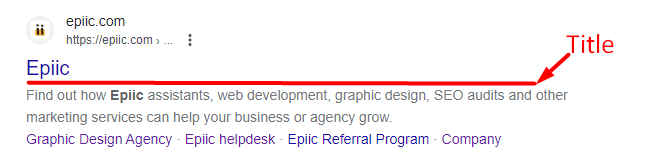
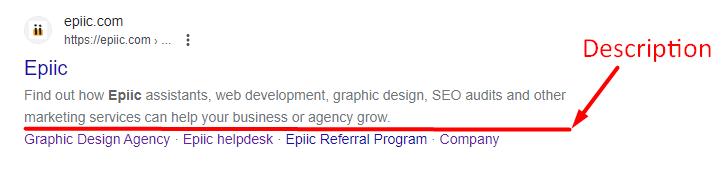
Meta tags cannot be seen on the page, but you can view them using special extensions or by inspecting the website’s pages in search engine results. Here’s an example snippet with meta tags for one of our pages:

Meta titles
Meta titles are HTML elements that specify the title of a webpage. They appear as clickable headlines in search engine results. Crafting concise and descriptive titles is crucial for attracting users and improving search engine visibility.
Meta descriptions
Meta descriptions are brief summaries that provide context about a webpage’s content. While they don’t directly impact rankings, compelling descriptions can entice users to click through to your site from search results.
What is the ideal length of meta titles
The ideal length for meta titles varies. But generally, keeping them within 50-60 characters ensures they display properly in search results without being cut off.
Characteristics of effective meta tags
Effective meta tags share several characteristics:
- Relevance: They accurately represent the content of the page.
- Engagement: Compelling titles and descriptions encourage clicks.
- Keyword optimization: Strategically include target keywords, but make sure they are being used naturally.
Tips for engaging meta titles
- Be descriptive: Clearly convey what the page is about.
- Include keywords: Incorporate relevant keywords for SEO.
- Ensure they’re unique and compelling: Stand out from competitors with unique titles.


Tips for engaging meta descriptions
- Clarity and relevance: Summarize the page content concisely.
- Call to action: Encourage users to take action or learn more.
- Use keywords naturally: Include keywords, but avoid keyword stuffing.


Create a logical website structure
Check your header and footer navigation
What should be in a header

The header should feature essential navigation elements like the menu bar, providing easy access to key sections of your website, such as home, products/services, about us, and contact. Additionally, consider including search functionality and contact information for enhanced user experience.
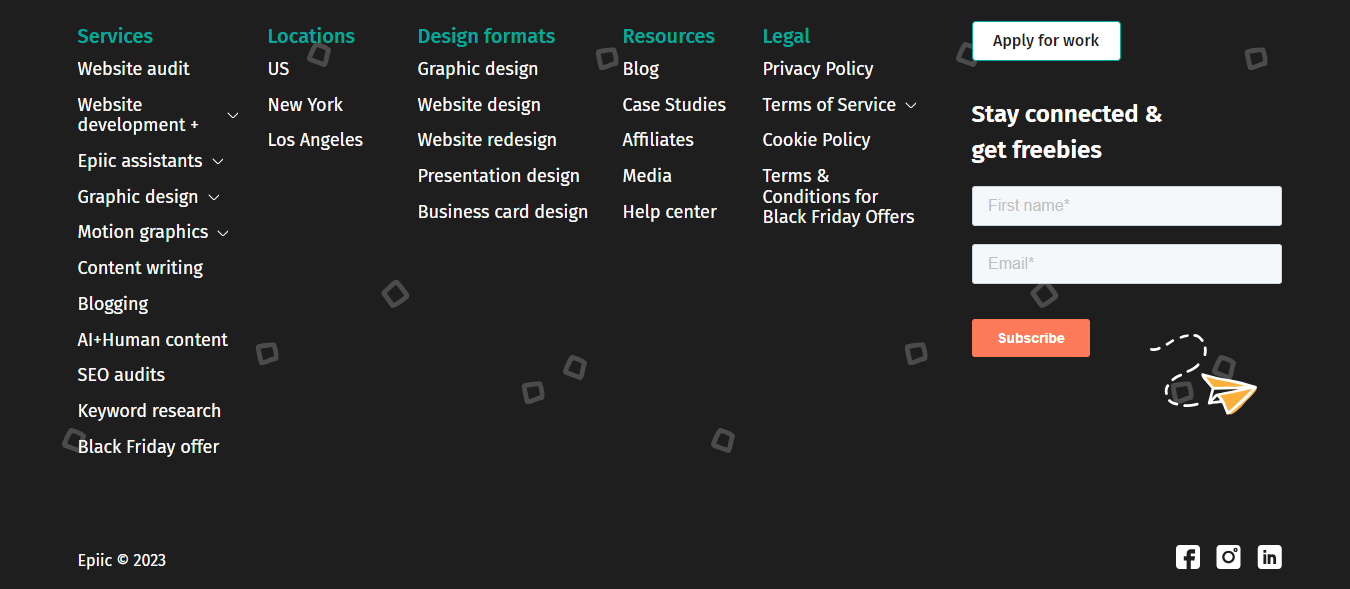
What should be in a footer
The footer should contain secondary navigation, contact details, social media links, legal information (terms of use, privacy policy), and links to important pages like FAQs, sitemap, or support. It acts as a navigational anchor for users exploring your site.
Consider logical flow between pages
The importance of interlinking
Interlinking involves connecting related pages on your site through hyperlinks. This practice enhances user experience, encourages further exploration, and spreads link equity, aiding in SEO.
Breadcrumbs navigation for better UX

Breadcrumbs provide users with a hierarchical trail that indicates their location within the site’s structure. This helps with navigation — users can easily trace their path back to previous pages, enhancing usability and reducing bounce rates.
Start an expert blog in your niche
Use your target audience’s pains as topics
Understanding your audience’s challenges and pain points provides a goldmine of topics for your blog. Addressing these concerns showcases your expertise and offers valuable solutions, resonating deeply with your readers.
There are many blogs that can be considered excellent examples of quality content. These include:
- HubSpot: A platform for marketing, sales, and CRM, and known for its blog offering valuable advice and strategies on various aspects of digital marketing. It contains extensive resources, industry research, and guides that help businesses grow and attract customers.
- Slack: A platform where the company shares insights about workplace processes, marketing, team management, and various aspects of business. They provide advice on improving work efficiency and navigating team dynamics.
- Ahrefs: A valuable resource for marketers and SEO specialists. It features tool reviews, insightful articles on search engine optimization, website analytics, and content marketing strategies. Ahrefs offers valuable advice and analytical data to enhance website visibility in search engines.
Analyze what your competitors do
Researching competitor blogs can provide insights into successful content strategies within your niche. Identify their popular topics, engagement tactics, and unique approaches. Use this analysis as inspiration to create your own distinct content.
Keyword research
Conduct an analysis of keywords associated with your niche. Utilize tools such as Google Keyword Planner, SEMrush, Ahrefs, or Ubersuggest to search for key terms. This will help identify the terms users are using to seek information within your domain.
Don’t forget to explore long-tail keywords. Some queries can be longer and more specific. These longer key phrases are often less competitive and can attract a more targeted audience — for instance, “how to choose a dress for a special occasion” instead of just “choosing dresses”.
Make a content plan
Define the topics and key phrases you’d like to cover. This could be a series of articles detailing the core aspects of your niche or analyzing current trends.
Post regularly
Consistency is key to building a loyal readership. Regularly publishing fresh, insightful content not only keeps your audience engaged but also signals search engines about your site’s activity and relevance. Aim for a consistent posting schedule to maintain reader interest and improve SEO.
The frequency of publications depends on your audience, content type, and your ability to maintain a specific schedule. For instance, news websites publish new material every day, but in niches requiring meticulous fact-checking and in-depth research, content might be released once every few months.
We recommend releasing approximately 4 posts per month — one post per week. It’s not too frequent, yet not too rare, and it’s suitable for most websites.
Want More Targeted Traffic? Choose Our Blogging Subscription Today for a More Engaging User Experience
- Ideation and Planning: We begin by generating topic ideas to populate your content calendar.
- Writer Selection and Briefing: Following that, we carefully select a writer for your projects and provide them with detailed briefs outlining your specific requirements.
- Order Placement and Timely Delivery: Our team manages the ordering process and guarantees punctual delivery of content.
- Quality Assurance and Optimization: We review the writing to ensure it aligns with SEO standards, requesting revisions as necessary for optimal performance.
- Publication and Reporting: Upon completion, we publish the posts on your blog and provide you with comprehensive reports on the finished work.
Implement content clusters
What is a cluster
Topic clusters, also known as content clusters, are sets of webpages aimed at establishing expertise in a specific subject, especially to gain recognition from search engines.
Within each topic cluster, there exists a main pillar page offering a comprehensive overview of the subject.
This pillar page acts as a central hub, linking to and being linked from cluster pages that delve into related subtopics.
For example, you might have a website dedicated to health. The pillar page could offer a detailed overview of the key aspects of a healthy lifestyle: proper nutrition, physical activity, and psychological well-being. Meanwhile, cluster pages would delve into specific subtopics related to a healthy lifestyle and focus solely on them. All cluster pages would link back to the main page and interlink with each other, creating a web structure that helps search engines understand that all this information is interconnected under one theme — health.

Why clusters are important
Developing a robust strategy centered around topic clusters can significantly benefit your SEO efforts. Why is this the case? Because as you generate high-quality content focused on a specific subject, you increase the range of keywords for which you can rank. Consequently, this builds up your authority on that topic.
This holds significance because Google prioritizes sites that exhibit Experience, Expertise, Authoritativeness, and Trustworthiness (E-E-A-T). Furthermore, establishing yourself as an expert in your field can draw in and captivate users. Constructing SEO topic clusters also aids in organizing related content within your website effectively.
Through linking to and from a pillar page, you assist users and Google in navigating related content and comprehending the semantic connections between various pieces.
All these elements collectively contribute to increased engagement and improved search engine rankings.
How clusters help drive traffic
SEO amplification:
By interlinking related content within a cluster, you create a network that search engines can easily crawl and understand. This boosts your site’s visibility for a range of keywords associated with that topic, potentially leading to higher search engine rankings.
Enhanced user experience:
Clusters organize content in a logical, user-friendly manner. When visitors find valuable information interconnected within a cluster, they tend to stay longer on your site, reducing bounce rates and signaling to search engines that your content is relevant and engaging.
Targeted audience engagement:
Clusters allow you to cover a topic comprehensively, catering to various aspects or subtopics that interest your audience. This depth of coverage increases the chances of capturing the attention of users who are looking for specific information within that topic niche.
Authority building:
As you consistently publish quality content on a specific subject, you establish authority and credibility in that domain. This expertise attracts more traffic, as users perceive your site as a reliable source of information.
Semantic search alignment:
Search engines, like Google, increasingly focus on understanding the context and relationships between content pieces. Topic clusters, when well-structured and interconnected, help search engines recognize the thematic relevance and semantic connections between your content, improving its visibility in search results.
How to build a cluster model
Identify the pillar topic:
Select a broad, core topic that aligns with your audience’s interests and your expertise. This topic serves as the main pillar for your cluster. For instance, if your pillar topic is “Digital Marketing,” the cluster might include subtopics like “SEO,” “Content Marketing,” “Social Media Marketing,” etc.
Keyword research:
Conduct thorough keyword research to understand related search terms and phrases associated with your pillar topic. Tools like Google Keyword Planner, SEMrush, or Ahrefs can help identify relevant keywords with decent search volume and lower competition.
Create pillar content:
Develop comprehensive, in-depth content on the pillar topic. This content acts as the cornerstone and covers the overarching theme broadly. It should provide an overview and link to the subsequent cluster content pieces.
Identify cluster topics:
Based on your keyword research, identify subtopics or clusters related to the pillar content. These should delve deeper into specific aspects of the pillar topic. For example, under “Digital Marketing,” a cluster could be “SEO Strategies,” “Content Creation Tips,” “Social Media Advertising Techniques,” etc.
Develop cluster content:
Create high-quality content for each identified cluster or subtopic. Each piece should cover the subtopic extensively, providing valuable insights, tips, examples, and possibly linking back to the pillar content.
Internal linking strategy:
Strategically link your cluster content to the corresponding pillar content and vice versa. This interlinking establishes a strong connection between the main pillar and its supporting clusters, aiding search engine crawlers in understanding the relationships between your content pieces.
Optimize for user experience:
Ensure a seamless user experience by organizing your cluster content logically. Use clear navigation, breadcrumbs, and relevant calls to action to guide users through the content structure.
Update and expand:
Regularly update and expand your cluster model with fresh and relevant content. This demonstrates your commitment to staying current within your niche and encourages return visits from your audience.
Master long-form content for your target keywords
Why long-form content has higher chances in SEO
Long-form content allows for comprehensive coverage of a topic, satisfying user intent for in-depth information. Search engines prioritize content depth and relevance. Longer pieces often encompass more relevant information, increasing the likelihood of ranking for various related keywords.
Creating long-form content involves several steps:
- Use keyword analysis tools like Google Keyword Planner, SEMrush or Ahrefs to identify popular queries.
- Choose keywords with high search volume and low competition (if possible) to make them attractive for your content.
- Determine the structure of the long-form content based on the chosen keywords.
- Break down the content into sections to ensure a logical flow and reader convenience.
- Use keywords naturally to keep the content informative and readable.
- Add details, examples, illustrations, or links to authoritative sources to substantiate information.
- Incorporate keywords into headings, subheadings, meta descriptions, URLs, and the body of the article.
- Create unique, informative meta titles, descriptions, and headlines to enhance visibility in search results.
- Proofread the text, correct errors, improve structure, and ensure clarity of expression.
- Break the text into paragraphs, and use lists, headings, and text formatting to enhance readability.
Examples of long reads can be found on various online platforms and publications such as journals, blogs, news websites, or specialized platforms for lengthy texts. For instance:
- Medium: A platform where authors publish articles on different topics, including long reads.
- The New Yorker: A publication known for its lengthy and in-depth articles covering diverse subjects from politics to culture.
- The Atlantic: Another publication that frequently publishes long, meticulously researched articles.

How to naturally integrate keywords into text
- Contextual relevance: Embed keywords naturally within the content, ensuring they fit seamlessly without disrupting readability.
- Variety and density: Utilize variations of your target keywords organically throughout the text. Avoid overstuffing; maintain a natural keyword density that flows naturally within the narrative.
Why it’s important to add lists and outlines
Enhanced readability
Lists and outlines break down complex information into digestible chunks, improving comprehension and user experience.
Structural organization
They provide a clear structure, making it easier for both users and search engines to navigate and understand the content. This improves dwell time and engagement metrics.
Long-form content, when optimized effectively, serves as a powerful SEO tool. It not only increases the visibility of your target keywords but also enhances user experience by offering comprehensive and well-structured information. Integrating keywords naturally and employing lists and outlines contribute to both SEO success and user satisfaction.
Elevate Your Content: Exceptional One-Off Writing Solutions
- Bespoke Content Creation: Tailored to your specifications, our one-off writing service delivers high-quality, custom-crafted content for your specific needs.
- Expert Writers: Our team comprises seasoned professionals who are native English speakers, adept at crafting engaging, informative, and SEO-friendly content across various industries and niches.
- Diverse Content Types: From articles, blog posts, and product descriptions to whitepapers and more, we cover a wide spectrum of content formats.
- Flexible Solutions: Whether it’s a single piece or a series, we adapt to your requirements, ensuring each piece stands out and resonates with your audience.
Turn your website traffic into leads
Add popups with value for visitors
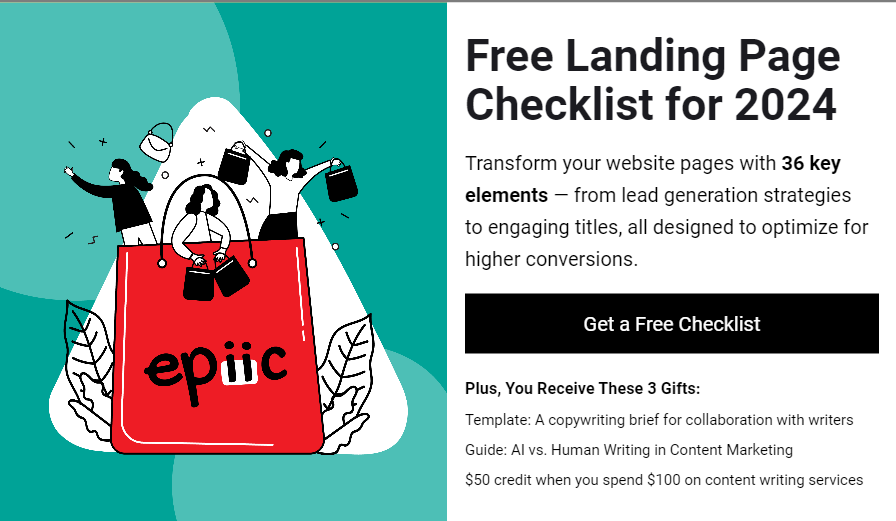
Discounts and special offers
Offering exclusive discounts or limited-time offers through popups can incentivize visitors to engage with your site and can convert them into leads.

Wheel of fortune

Interactive elements like a spin-the-wheel game offering discounts or freebies upon signup can captivate visitors’ attention and encourage lead generation.
Newsletter subscriptions
Encourage visitors to subscribe to your newsletter for regular updates, valuable content, and exclusive offers, fostering a long-term relationship with potential leads.
Integrate a chat widget

Ensure availability
Implementing a responsive chat widget ensures timely resolution of visitors’ queries, improving their experience and significantly boosting lead generation potential. This enhancement positively influences traffic-to-lead conversion on the website, fostering a positive user experience and encouraging visitor engagement, ultimately driving successful lead generation.
Fast response time
Aim to promptly respond to inquiries, offering real-time assistance to build trust and reliability. This approach contributes to increasing traffic conversion on your website into leads, as swift and accurate responses create a positive user experience, encouraging further interaction and promoting trust in your company.
Create a lead magnet
What is a lead magnet
A lead magnet is a valuable incentive offered in exchange for contact information, such as ebooks, guides, templates, or exclusive content.
Choosing a topic
Select topics aligned with your audience’s needs or pain points. Addressing specific problems or offering solutions enhances the magnet’s appeal.
Implementing strategies like enticing popups, responsive chat widgets, and valuable lead magnets can effectively convert website traffic into potential leads. These tactics engage visitors, offer value, and encourage interaction, ultimately boosting lead generation and nurturing a customer base.
On average, the conversion rate of websites ranges from 2-3%. However, for the top-performing sites, it can rise to up to 11%.
As a brand, there are various measures you can take to enhance your website’s performance. Among them, end user optimization is a great option.
It helps enhance your audience’s experience and makes your site mobile-friendly. Considering that most people access the internet using
mobile devices, optimization is essential.
Optimizing your site goes beyond improving its performance. It also enhances user experience (UX), encouraging users to spend more time on your site. This then boosts your search engine rankings, giving you access to a larger audience.
Whether you’re a digital marketer or website owner, you need to focus on end user optimization. As it elevates UX, it will give you an edge over rivals.
So, keep reading to gain valuable insights and practical tips to improve your site’s UX and SEO.
What Is End User Optimization?
End user optimization is the process of improving a site’s user-friendliness and ranking. Its goal is to provide a seamless user experience that keeps visitors on your site longer. In so doing, optimization encourages traffic to explore more content and convert.
As such, it’s a holistic process encompassing UX design principles and SEO strategies.
It involves:
- Creating an intuitive navigation structure
- Implementing a responsive design that adapts to various devices
- Ensuring fast loading times
As you can see, user optimization goes beyond pleasing your visitors. It’s also about improving site performance. When your site performs well, search engines take it as a sign that your content is high-quality.
This can boost your site’s visibility on search engine result pages (SERPs). As a result, you can expect more traffic and leads. Hence, end user optimization is a crucial aspect of web development. By intertwining the user’s needs with SEO objectives, it boosts performance.
Why Should We Improve End User Optimization?
There are over 1.5 billion websites in the world today. Among them, 200 million are active and competing for the same audience. Thus, your site needs to stand out to attract your target audience.
This is where end user optimization is crucial. By influencing SERP rankings, it determines how visible your brand will be. Moreover, it helps keep your visitors scrolling and interacting with your content longer.
For your website to meet such standards, it needs to be:
- Intuitive
- Easy to navigate
- A valuable resource for visitors
The advantages of a user-friendly website are manifold, including:
- It enhances user satisfaction: Visitors will likely return and stay loyal if your website is easy to use.
- It lowers bounce rates: If your website is not easy to navigate, users will not stay for long. As this continues to happen, it will impact your SEO rankings.
- User-friendly sites can increase your conversion rates: Easy-to-use sites give customers room to explore your services and purchase. Also, happy clients are more likely to come back and tell others about your website.
- Search engines favor user-friendly websites: Offering a great user experience makes your site seem reliable to search engines. This will then improve your search engine rankings and visibility.
Creating a website that is easy to use is great for both UX and SEO. It enhances users’ experience and improves your website’s visibility. In turn, as your rankings improve, it will make your brand seem more credible to your audience.
5 Principles of User Optimization
Now that you understand the value of end user optimization, it’s time to know how to achieve it.
There are five principles that you should observe. They range from optimizing page speed to delivering high-quality content. While you can apply each principle independently, you need to do so concurrently.
If there’s something that can impact bounce rates, it’s page load speed. You’ll lose traffic for each extra second your site takes to load.
Thus, one of the key cornerstones of user optimization is fast loading times. When your site loads quickly, users will have a hassle-free browsing experience. This will allow you to hold their attention for longer. In turn, your bounce rate will reduce while the average time spent on your site increases.
Fast loading time is also great for keeping mobile users. Since they’re often on the move and need quick access to information, you’ll meet their needs.
From an SEO perspective, fast loading times are an invaluable asset. This is because search engines like Google use algorithms that focus on it. As your ranking improves, you’ll notice a rise in organic traffic, leads, and sales.
In web design, user experience and navigation are vital elements. The easier it is for visitors to navigate your website, the longer they stay and the more likely they will return.
So, the first thing you’ll need to optimize your website is an intuitive framework. It will guide users to the right pages, increasing the quality of browsing sessions.
Some of the features that you can expect with an intuitive framework include:
- Smooth transitions
- Distinct labeling
- Logical formatting
In addition to these great features, you’ll also need website navigation tools such as search bars. These will help users find their way from one page to another without issues.
Furthermore, you’ll also need to understand user behavior to optimize website performance. You can achieve this by analyzing metrics such as average time on page and return visitors. From the insight you gain, you can optimize your strategy to suit your unique needs.
Unlike in the past, consumers can access the internet using various devices. These range from desktops and laptops to tablets and mobile phones. Each device has unique requirements when it comes to optimal website performance.
For instance, some web pages appear without issues on desktops. But if they’re not optimized for mobile, the same page will seem distorted on a smaller device. This is why your web design should be responsive.
By improving responsiveness, your website will adjust to suit different screen sizes. Therefore, regardless of the device a lead uses, you’ll deliver a good user experience.
As you focus on a responsive design, remember it’s not only about aesthetics. Your efforts should focus on improving functionality, as navigation issues increase bounce rates. Moreover, a mobile-friendly website aids SEO performance.
In the digital ecosystem, you need a robust content strategy to remain relevant. It should focus on providing engaging, informative, and optimized content. Beyond SEO, good content is also crucial for user optimization.
For your content strategy to thrive, focus on educating and solving user problems. The more value you offer, the longer they’ll stay on your site and explore. Moreover, high-quality content enhances your brand’s credibility.
With regard to SEO, don’t forget to infuse your content with keywords. These are words that help search engines associate your content with search queries. On the flip side, you should adopt healthy keyword practices to avoid negative SEO.
Here are some quick tips for creating a memorable content experience:
- Understand your audience: Know who your users are and what they want. Use this information to tailor your content to meet their needs and interests.
- Provide valuable information: Ensure your content is informative and answers users’ queries. This can position you as an authority in your field.
- Engage your audience: Incorporate interesting facts, story-telling, and other creative elements to keep your audience engaged.
- Optimize for SEO: Use relevant keywords within your content. Also, don’t forget about meta tags and alt text for images.
- Update regularly: Keep your content fresh and up-to-date. This shows your users (and search engines) that your site is active and reliable.
Crafting a memorable content experience is an ongoing process. You need to ensure loyal followers have a consistent stream of content. This is a simple strategy that keeps you top of mind with your audience and strengthens your brand.
However, to achieve this, you must ensure content resonates with your audience. So, use performance metrics and feedback to determine what works best and focus on it.
CTA buttons are vital in website design. They help users engage and convert. But it’s not only about telling users what to do and when. Their goal is to guide users further along the buying journey, from interest to sale.
As such, they should be positioned strategically and use clear and actionable language. This should be accompanied by responsiveness across all devices to boost results. With such CTAs, you’ll reduce friction in the conversion process, increasing performance.
Stay Ahead of the Competition
When building a strong digital presence, SEO and end user optimization go hand in hand. From quick load times to intuitive navigation, there are key areas you should focus on. These will help you deliver a seamless user experience, boosting engagement and rankings.
They should be accompanied by a robust content strategy to engage and inform users. Along with being engaging, optimize your content to improve ranking on SERPs. As more people engage with your content, ensure your CTAs will drive them to action.
By taking these steps, you’ll be well into your user optimization journey. However, keep in mind that user optimization requires consistent monitoring and fine-tuning. It’s only by working on it consistently that your site’s performance and ranking will improve.
Need help with website management? You can count on our Website Optimization service to help you build a formidable online presence. We use the best UX/UI, CRO, and SEO practices to give you a fully functioning website. In turn, this will translate to higher-quality leads that will propel your brand forward.
Our Website Optimization service includes:
- SEO
- User experience
- Content
- Design
- Conversion Rate Optimization (CRO)
- Analytics & Tracking
- Technical SEO
A great startup website can help accelerate your journey to success. It can help you build a formidable online presence and overcome steep competition.
Earning customer trust remains a startup’s biggest hurdle. Having an excellent startup website can help you overcome this problem.
It can help you tell a compelling brand story and convey your values. It’s a chance to connect with an audience that needs your product and services.
Are you a founder, a CMO, or a solopreneur wondering how to achieve this incredible feat? Here are 13 of the best startup website examples for inspiration.
What Is a Startup Website?
A startup website serves as your digital storefront. It helps connect potential customers with your brand. It informs them about your products and services, mission, and team. Startup websites are different because they focus on new businesses or products. They may require frequent web maintenance to accommodate your growth.
Startup websites aim to generate leads, gain investors, and build a brand presence. They must grab visitors’ attention and showcase a startup’s unique value. These websites usually have a smaller budget and shorter development time.
Building a startup website is a joint process. It involves the founders, web designers, developers, and digital marketers. The process allows you to create an engaging website that communicates your USP.
What Makes a Great Startup Website?
The best startup website resonates with your audience. It grabs and draws their attention to your brand. An effective startup web design introduces your brand and shows your customers what to do.
So, what should you consider for a great website design?
- Simple design: A minimalist design is perfect for a startup. It fades into the background to help your message stand out. A simple design lets your prospects know what you do and what you expect of them.
- Clear and compelling message: The website should highlight your unique value proposition (USP). It addresses the reader’s pain points and provides a compelling reason to buy.
- User-friendly navigation: Intuitive navigation creates a positive user experience. It helps prospects find the information they need. Clear menu structures, logical content flow, and tasteful CTAs ensure seamless navigation.
- Engaging visuals: Beautiful graphics, images, and videos help capture visitors’ attention. Select visuals that align with your brand and audience to improve user experience.
- Conversion optimization: Optimize the website for conversions by guiding visitors towards desired actions. You can prompt users to sign up for a newsletter, request a demo, or buy a product.
Working with a reliable web design agency can help you get the best startup website. It can also provide top-notch web maintenance services to help you outpace the competition.
13 Best Startup Websites
Here’s a collection of the best startup website examples that may inspire your journey to a successful launch.
Loom
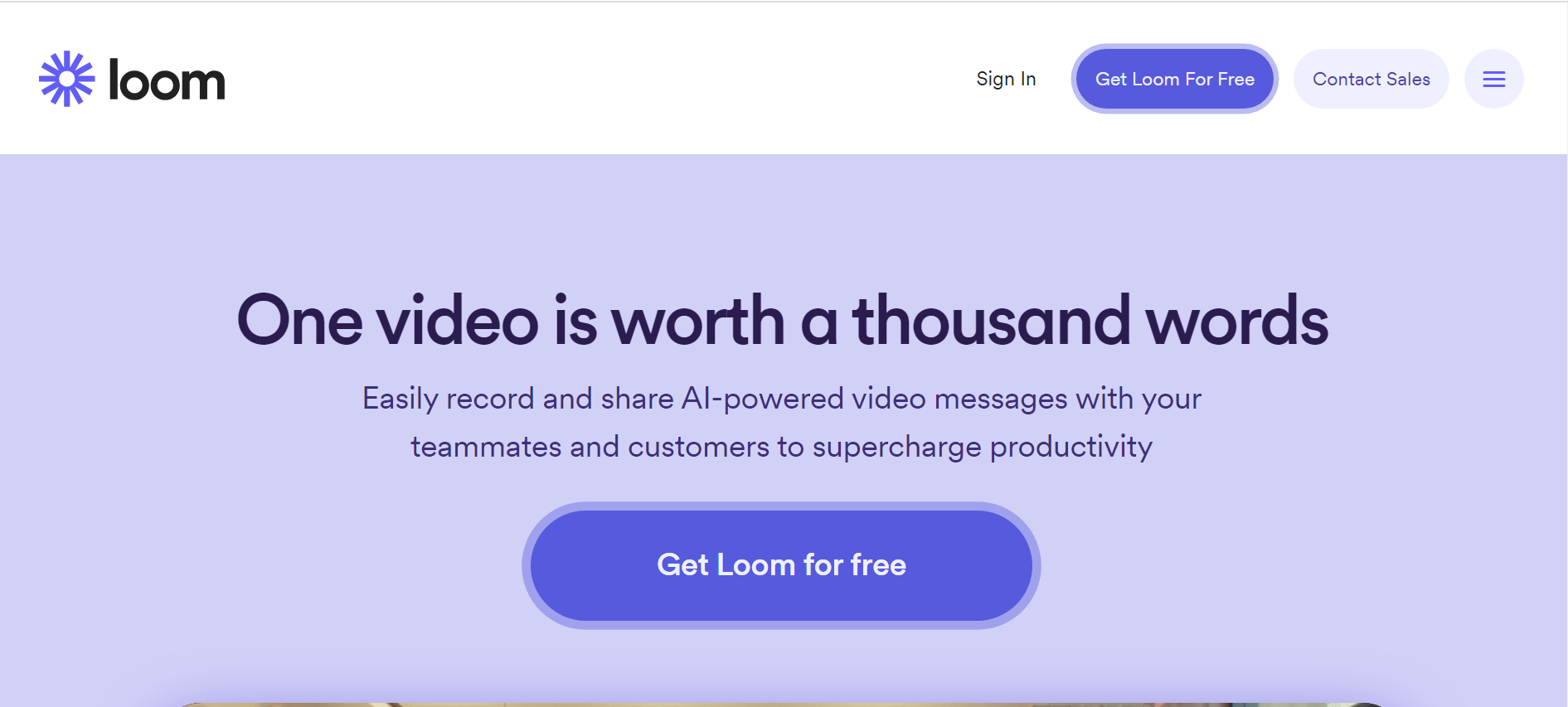
Loom allows you to record your computer screen. It uses a minimalist homepage to communicate its unique selling proposition. It uses a sticky headline to share the benefits and its USP. The homepage also features a video showing how Loom works and a clear CTA button.
- Pros: The design keeps the page simple and clutter-free. The tasteful purple and white background creates great contrast. Custom messaging, bold CTAs, and social proof drive conversions.
- Cons: You’ll need to scroll to the bottom of the page to learn about the features. That may be off-putting to some people who wish to learn more about the brand without signing up.
Cazoo
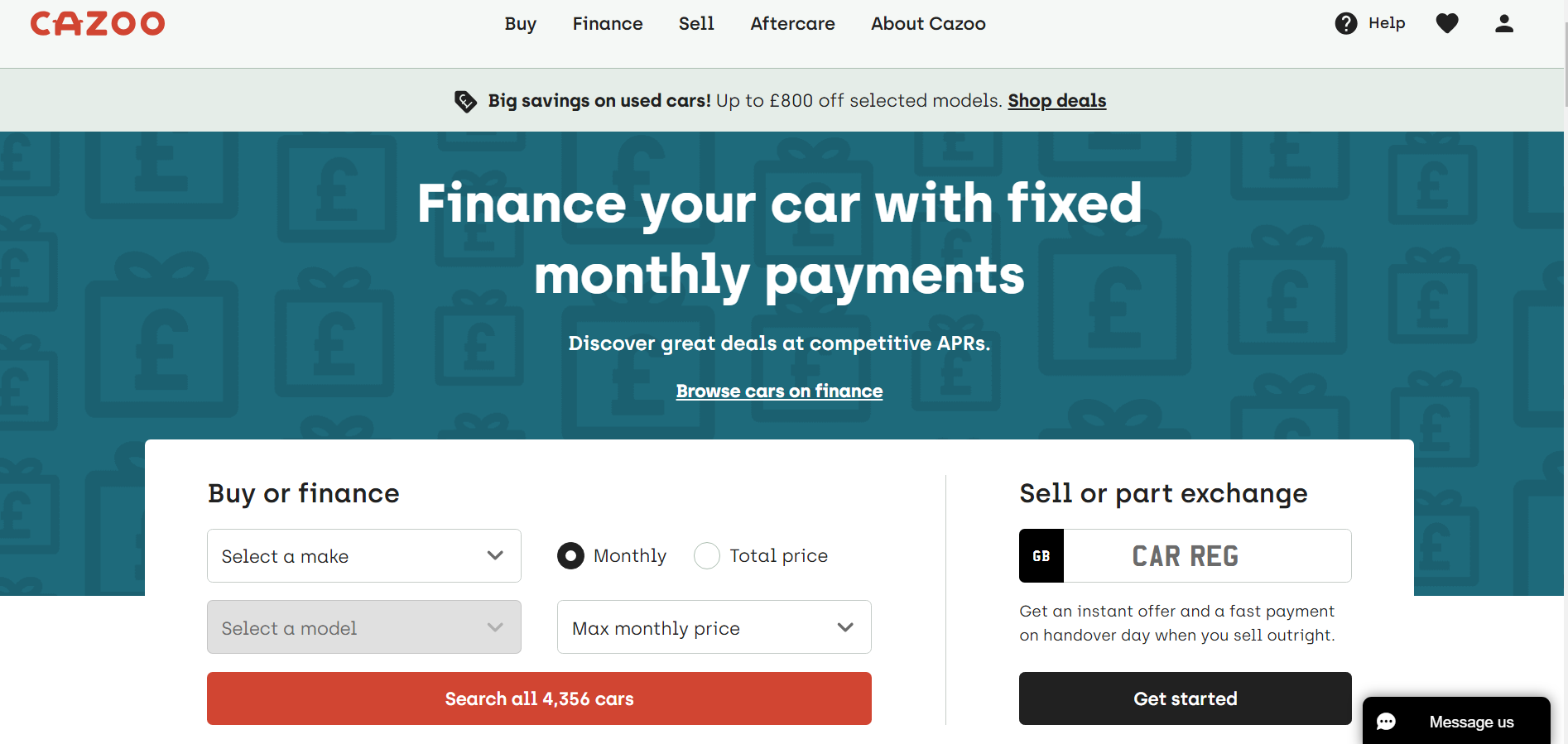
Cazoo is a UK-based startup that simplifies the process of buying and selling a car online. The custom homepage targets buyers and sellers. It also uses sticky headlines to communicate its USP. Tasteful use of fonts, white space, and colors gives the page a classy feel that engages the reader. It uses forms to help buyers search for cars by make, model, and financing option.
- Pros: Cazoo’s website shows a sound understanding of their customers’ needs. It uses various page elements to usher visitors into the correct sales funnel. The web page design makes for a frictionless process to recruit more users.
- Cons: Social proof is tucked at the bottom of the page, which may hurt conversions.
Clubhouse

Clubhouse is an audio app that helps subscribers converse with each other. It cuts against the grain with a bold, animated homepage. The page turns yellow as you scroll up, and images of potential friends float around the screen. A sticky headline communicates the app’s USP. A bold CTA invites you to download the app.
- Pros: The website design encourages downloads. It doesn’t burden you with too much information or menu options. It uses animated features to take you on a mental journey.
- Cons: The page is entirely visual and doesn’t feature the app’s features and offerings.
Attentive

Attentive allows online businesses to target customers with personalized, automated text messages. The startup uses a colorful homepage with bold claims to showcase its value. A CTA button prompts visitors to book a demo.
The rest of the homepage shows how the brand fulfills its promise. It shows the current users who include major brands. It offers insights and examples of how the service works.
- Pros: The website uses colors, persuasive copy, and social proof to attract the reader. Visual elements such as images, videos, and buttons help drive engagement and conversion.
- Cons: The social proof includes brands using the service but lacks customer reviews.
Krochet Kids
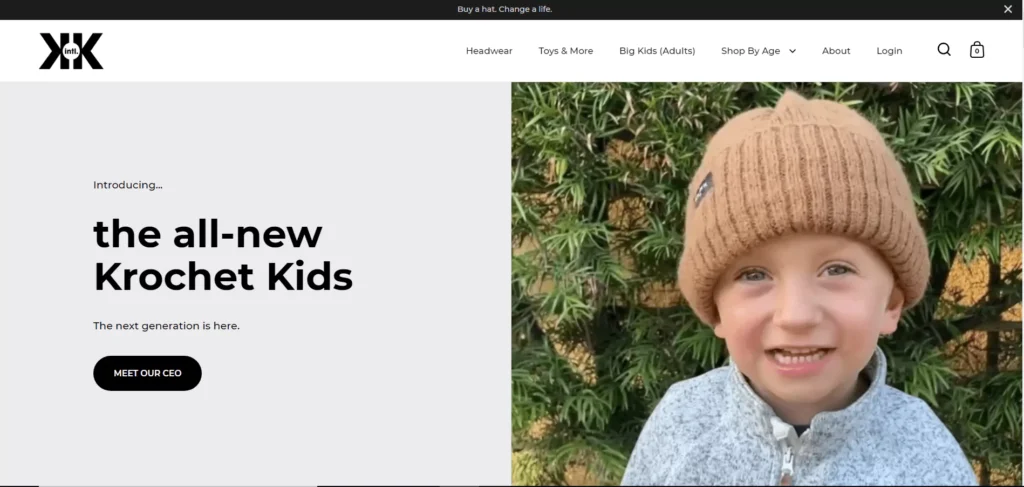
Krochet Kids empowers women in third-world countries by marketing their headwear and accessories. The startup’s website harnesses the power of visual storytelling. It uses images and videos to take you on an emotional journey. It uses minimal text, but every word is chosen for impact.
- Pros: Every element of the startup website is meant to appeal to your emotions. The images of kids wearing products and the women crocheting them scream compassion. The website uses CTAs and product listings to drive sales and conversions.
- Cons: The homepage doesn’t make good use of social proof. It doesn’t tell how buying its product helps to transform lives.
Shadowmap

Shadowmap helps designers create realistic shadows in their 3D models. The startup website uses a video in the hero section to inform you what they do. A bold CTA invites you to try out the technology without an account or download the app.
- Pros: The startup website is eye-catching and informative. It shows a keen understanding of their target audience. It combines images, persuasive copy, and videos to address the user needs. It uses interactive images to deliver its USP.
- Cons: The social proof lacks user input and may potentially affect conversions.
A standout website in the fiercely competitive startup landscape can make all the difference. With our game-changing Website Builders service, we help startup founders tilt their scales in their favor. We’ll build a custom startup website optimized for conversions to help you dominate the market. Our comprehensive web maintenance service will keep your website running smoothly. Get started today!
Common

Common helps people conveniently find apartments and coliving spaces in major US cities. The startup features a quiz on its homepage to improve navigation. The dynamic quiz complements the eye-catching design to enhance user experience. The page uses clear images and compelling copy to showcase Common’s USP and offerings.
- Pros: The web design prioritizes helping prospects understand the startup’s offerings. A search function delivers custom results for each user. It combines images, concise copy, and FAQs to address potential concerns.
- Cons: The innovative design pivots radically from the typical real estate web designs.
Apothékary

Apothékary promotes wellness through personalized natural solutions. The startup uses an interactive website to connect with its prospects. The brand demonstrates excellent customer insights. It includes a quiz and interactive content on the homepage to drive engagement. Motion graphics, targeted product offerings, and an appealing layout help drive sales.
- Pros: The startup website accounts for the brand’s diverse product offerings. It saves users the hassle of endlessly scrolling through the site. Users can use the quiz to find the perfect product or chat with an expert.
- Cons: The design doesn’t incorporate user reviews for the brand, just individual products.
Lightyear

Lightyear produces innovative solar products to help customers switch to sustainable energy. The homepage features a video showcasing its state-of-the-art manufacturing facility. The rest of the page uses white space, clear copy, and images to craft a compelling story.
- Pros: The website has a clean, professional look and focuses on the startup’s products. The startup maps the content on the page to their prospect’s buyer journey. That ensures seamless navigation and improves user experience.
- Cons: The website is media-heavy and may not display correctly on slow connections.
Squadeasy
Squadeasy gamifies physical activities to encourage people to embrace an active lifestyle. The startup’s website reflects this theme. It uses animations, interactive graphics, and appealing typography to improve user experience. The startup presents content in a fun and exciting manner to drive engagement.
- Pros: Using a fun theme and interactive content makes the website unforgettable. An interplay of stylish design, helpful content, and interactive images encourages readership. The unique approach makes the startup stand out as a fun brand instead of being another health app.
- Cons: The over-the-top animation may turn off some prospects.
January

January is a virtual glucose monitor that continuously tracks your blood sugar. The startup website is the epitome of refined health marketing. Alongside the innovative design, the website is optimized for conversion. The startup pairs helpful content with tasteful pop-ups to capture leads.
- Pros: The startup website complements the buyer’s journey. It fills each stage with quality content to help prospects make informed choices. It also uses pop-ups to capture leads to drive a targeted email campaign. January understands its target audience and has optimized its website for lead generation.
- Cons: The website uses a comprehensive approach that may intimidate potential users.
GoHenry

GoHenry is an online solution that helps parent track their child’s spending. The startup uses web elements to create a resonance with its target audience. It uses concise copy to appeal to parents and vibrant visuals to appeal to the kids. The page layout demonstrates a keen understanding of a parent’s buyer journey.
- Pros: The web layout helps the startup capture the attention of the targeted audience. It also walks them through the sales funnel. Enchanting visuals, customer reviews, and persuasive copy help drive engagement and conversions.
- Cons: The social proof doesn’t include feedback from the kids. Detailing how the app helps improve financial habits can help increase downloads.
MikMak
MikMak is an online B2B solution to help manufacturers grow their sales. The startup’s website demonstrates deep audience knowledge. The design allows MikMak to provide its audience with in-depth information. Excellent copywriting enables the startup to create heavily informative but clutter-free sections.
- Pros: An excellent website design allows the startup to create a custom sales funnel. It comprises actionable guides, resources, testimonials, and case studies. The website is heavily informative and still does a great job pitching the reader.
- Cons: The website uses limited motion graphics. Increasing motion graphics can eliminate unnecessary clicks and improve user experience.
Build the Perfect Startup Website
A startup website lets you show off your brand. It’s an opportunity to connect with your target audience and showcase your offerings. The best startup website designs allow you to recruit new users and convert them into sales. A successful online presence requires a great web design and a reliable web maintenance service.
Ensure your startup site:
- Conforms to modern design trends
- Is responsive and mobile-friendly
- Maps the customer’s buying journey
- Has effective messages
- Uses great visuals
These guidelines will help grow the brand following and maximize conversions while keeping your cash register ringing.
We’re a Web Development service provider that goes the extra mile to ensure you have a strong digital presence. While we prefer building sites on WordPress, we also use other website builders and CMSs to meet client objectives.
Our Website Development service includes:
- SEO
- User experience
- Content
- Design
- Development & Testing
- Analytics & Tracking
- Technical SEO
Creating a stunning design and publishing engaging content is only half the online marketing battle. Your website requires regular care and attention to achieve peak performance. Routine website maintenance allows your site to evolve and accommodate growing business needs.
Whether you’re a solopreneur or a huge brand, a healthy site is vital for online success. Having an effective website development and maintenance routine helps drive sales and conversion. It’s critical for building a profitable online presence.
What is Website Maintenance?
Website maintenance comprises a series of tasks to help you improve your site’s health and functionality. Routine duties include software updates, managing content, improving SEO performance, and updating site security. An efficient maintenance routine turns your website into a highly functional online asset.
Website maintenance underpins your ability to generate leads and convert them into sales. It improves your ability to connect with your audience and attract web traffic. Improving site health can help you dominate the search results. Routine maintenance also enables you to stay current. You may use the insights to adapt your business strategy and outpace the competition.
Routine maintenance is crucial to website security. It lets you avoid potential security breaches and cyberattacks. Prioritizing safety and security protects your website, visitors’ data, and reputation.
Why is Website Maintenance Important?
Ignoring website maintenance is tempting when you have a lot on your plate. Sometimes, you may lack the technical skills to handle these maintenance and development needs. Yet, keeping your website healthy, current, and secure is important for many reasons.
Improves User Experience
Your website must provide an excellent user experience to outpace the competition. You must address everything, from page loading times to site navigation and mobile optimization. Regular website maintenance helps you achieve this. Update your website with new content, fix broken links, and boost your website speed to under three seconds. That increases accessibility and ensures your customers have the best possible experience. Plus, a great user experience helps increase customer retention and loyalty.
Boosts Search Engine Rankings
High search engine rankings are vital for business success. Your website must rank well on search results to drive traffic to your offers. Routine website maintenance can help target and rank for valuable and relevant keywords. It lets you identify and fix issues that lower your site’s online visibility. Optimizing images and meta descriptions and targeting high-value keywords can help.
Protects Your Website From Cyber Attacks
Website security is often overlooked but is a critical aspect of website maintenance. Hackers are always looking for vulnerable websites to attack. A cyberattack can ruin your business reputation and revenue. Updating your security features, such as firewalls, software, and plugins, can prevent attacks. Backups are also essential in case of any security breaches or data losses.
It Saves Time and Money in the Long Run
Regular website maintenance helps you save time and money in the long run. Timely website updates can prevent major issues that can be expensive to fix. Identifying and fixing website issues early on can save time and effort. It lets you resolve technical issues before they ruin your business. A well-maintained site is also less likely to face major cybersecurity risks. That saves you the money and effort of dealing with damage control.
In the race to grow a formidable online presence, a highly converting website can help you outpace the competition. Our reliable Website Builder service can help you thrive in a cutthroat environment.
Keeps Your Website Relevant and Engaging
Regular website maintenance helps you keep your website relevant and engaging. Sometimes, you may change your business and its products and services to accommodate consumer behavior. You should rethink your website to reflect these changes. Updating your website’s design, layout, features, and content helps engage your customers. It also ensures your website reflects your business’s current message and branding.
Improves Website Security and Safety
Security updates help you correct any security flaws on your website. Security flaws increase the risk of cyberattacks such as malware, phishing, and ransomware.
Updating your website’s security helps you reduce these risks. It protects your business from costly security breaches, data theft, and website failure.
Security updates also help improve the website’s performance, speed, and functionality. A secure website boosts customer’s trust and confidence in your business. It enables you to enhance your brand reputation and drive more sales.
Security updates help you abide by data privacy regulations such as GDPR. Failing to follow these regulations can result in hefty fines and legal liabilities.
Backup and Disaster Recovery
Sometimes, your website may crash. While this is a rare occurrence, having a backup of your website can be a lifesaver. A backup plan prevents data loss by creating copies of your database and content.
You can use the recent backup for restoration if any data is lost, corrupted, or compromised. The frequency of backups varies, but at least once a week is ideal.
Besides backing up your files, you need a disaster recovery plan. Such a plan outlines the recovery process after a potential disaster. It allows you to restore your site and reduce the downtime quickly.
Performance Monitoring and Optimization
A slow website can hurt your brand reputation and conversion rates. Monitoring your site’s performance can help you avoid such problems. Website maintenance can help you identify possible issues that could harm your sales and conversions. You can track key metrics and determine how they affect your site’s performance.
Crucial metrics include page load speed, site uptime, and device responsiveness. Once you establish a baseline, you can optimize the site for performance. You’ll need to run tests to measure the impacts of your optimization efforts.
SEO Monitoring
A solid SEO strategy is vital to your online success. With Google continually rolling out updates, the SEO landscape is highly dynamic. You must constantly review your strategy to accommodate the changes. Tracking your results helps you refine your SEO campaigns for efficiency.
More importantly, SEO monitoring spares you the headache of reacting to every update. Sometimes, Google updates will wreak havoc on your search rankings. That doesn’t always point to a fault in your strategy. The search engine often corrects the anomalies and restores your rankings.
SEO monitoring offers great insights to help your website ride out such glitches. If an update does affect your site, you can easily narrow down the root cause. That allows you to take quick reactive measures and regain your search rankings.
Support and Maintenance Plans
Website maintenance is an ongoing continuous process. Your website may run into any number of disruptive issues. It may encounter bugs or technical errors that may affect functionality.
Most web agencies offer maintenance plans that include technical support. They can help you address website downtime, broken links, and errors. A dedicated support team will identify and fix technical problems and reduce disruptions.
Having a support and maintenance plan in place gives you an edge. It keeps your site well-maintained, functional, and secure. It also enhances the user experience and safeguards brand reputation.
Streamlined Content Updates
Fresh and updated content can increase your website’s traffic and keep visitors engaged. Updating old content can help you secure top positions on the search results. You can dominate the market, outpace the competition, and skyrocket your sales. It’s also a chance to build site authority and demonstrate expertise.
Auditing your current content helps identify content gaps and ranking opportunities. It enables you to create compelling content that resonates with your audience and targets valuable keywords. Updating content lets you build subject matter expertise, earn readers’ trust, and convert them into paying customers.
Peppering your website with a steady stream of fresh content builds a loyal audience. A cult-like brand following boosts website traffic and search rankings. It also compounds your competitive advantage by attracting natural backlinks.
Accessibility Testing
Accessibility testing helps promote inclusivity. It allows people with disabilities to easily access your site and content. It’s a proven way to expand your audience and show a commitment to serving all users.
In many countries, website accessibility is a legal requirement. The Web Content Accessibility Guidelines (WCAG) provide the legal protocol for website accessibility. Conducting accessibility testing helps reduce the risk of potential violations.
Many accessibility features have SEO value. They help improve site structure, which makes your site discoverable to search engines. The search spiders can easily crawl and index your pages and help you rank higher on the search results.
How Often Should You Do Website Maintenance?
The frequency of website maintenance differs between websites and businesses. Your site’s size, complexity, and purpose help determine the frequency. Ideally, it is best to tailor your maintenance efforts to complement your business.
Typically, web maintenance tasks are diverse to help you address various needs. Some routine tasks help keep the site running smoothly. Others focus on the bigger picture and business growth.
Weekly Web Maintenance Tasks
Weekly website maintenance tasks help keep your site’s functionality at peak performance. They allow you to promptly address issues that may lower search rankings. Dropping search rankings cost you sales and conversions, reducing your profits.
- Ensure all pages load quickly without errors
- Update plugins and website software
- Clear spam comments from posts and pages
- Check if all lead capture forms function properly
- Check pages for broken links
- Find and fix any 404 errors
- Upload more content to drive engagement
Monthly Web Maintenance Tasks
Monthly maintenance tasks are part of your long-term growth strategy. They allow you to make strategic moves backed by crucial data. Use the data from your search console to identify your strengths and opportunities.
- Check the site’s loading speed and address any issues that crop up
- Review website security and ensure everything is up to date
- Analyze the data from the previous month
- Check your blog for any outdated pieces
Quarterly Website Maintenance Tasks
Quarterly website maintenance tasks are more involved. These tasks focus on finding ways to streamline the site and improve its performance.
- Check if your website design needs improvement
- Review and update the graphics and images
- Review and optimize SEO tags, meta titles, and page descriptions
- Optimize your lead capture forms and popups
- Identify possible areas for automation
- Review and refine your marketing and advertising campaigns for efficiency
- Test your backups to ensure they’re error-free
Yearly Web Maintenance Tasks
Annual website maintenance tasks ensure your website aligns with your business strategy. They also address crucial admin tasks such as certifications and renewals. It’s also an opportunity to improve your content marketing strategy.
- Review and update each page for content accuracy and relevancy
- Renew hosting and domain name
- Review and improve top-performing pages
- Consider merging or deleting poor-performing pages
Streamline Your Website and Grow Your Business
As online marketing becomes cutthroat, website maintenance is no longer optional. It’s a critical necessity that determines your online success. Typically, web maintenance activities range from simple tasks to highly complex processes.
Investing time and resources into a website maintenance plan yields numerous benefits. It helps keep your website safe and secure from cyber threats and vulnerabilities. Updating your content management system, plugins, and themes improves site performance and delivers a seamless user experience. It helps you build a profitable online business that’ll serve you for years.
Need help with website management? You can count on our Website Optimization service to help you build a formidable online presence.
Our Website Optimization service includes:
- SEO
- User experience
- Content
- Design
- Conversion Rate Optimization (CRO)
- Analytics & Tracking
- Technical SEO
Once your beautiful and functional website is up and running, the battle is on. You’re in the race to attract visitors, generate leads, and turn them to buy. So is every other business in your space.
How can you help your website stand out and outpace the competition? By implementing an efficient website management system that allows you to optimize your website to improve customer experience. A well-managed website can speed up your journey to online success.
What is Website Management?
Web management is a process of keeping your website running smoothly. It covers a series of practices and techniques that help a website achieve its goals. The process tracks every aspect of your website and ensures it functions flawlessly.
Website management is the digital equivalent of servicing your car. A specialist combs through your website, fixing faults to ensure it runs smoothly. The process entails updating site design, backing up data, and improving website security.
While managing a website may seem easy, it takes refined expertise. Typically, a website manager handles website management. Depending on the site’s complexity, a manager may work alone or with a team of specialists.
A website management team includes a digital marketer, graphic designer, SEO specialist, content writer, and web developer.
Why is it Important?
An effective website management system ensures business success. It lets you build a solid online presence, generate leads, and convert them into sales. A well-managed site also ranks higher in the search results.
A proper website management system helps:
- Improve user experience: A well-managed website provides a seamless browsing experience. It ensures the site is easy to navigate, loads quickly, and has updated content.
- Increased online visibility: Proper website management improves a site’s search rankings. You can launch effective SEO strategies and improve your site’s online visibility. It also boosts organic search rankings.
- Improved safety and security: Websites are vulnerable to cyber threats. Regular website management helps protect your website and users’ data. It enables you to install the latest security measures.
- Champions business growth: A well-managed website helps attract and retain customers. It allows you to expand your brand presence, generate leads, and convert sales.
Website Management: 6 Essential Steps to Success
A content management system (CMS) is crucial to your online success. A quality CMS solution lets you design a website and manage the content creation process. It simplifies the website management services and builds a flawless workflow process. You may use a CMS to create anything from a simple one-page website to a complex, multi-functional site.
There are different kinds of content management systems available in the market. The most popular ones include WordPress, Drupal, and Joomla. While all CMSs serve the same purpose, they offer different user experiences.
Choosing the right CMS is essential to effective website management. That’s because efficient website management starts with designing your site. But it comes down to your needs, skills, and preferences. Some critical factors to consider when picking a CMS include:
- Ease of use: Look for a CMS with an intuitive interface that allows you to create and manage content easily.
- Scalability: Choose a CMS capable of growing with your business. It should handle increased traffic, content volume, and extra features without performance issues.
- Flexibility and customization: The best CMS offers a wide range of themes, templates, and plugins to let you customize your site.
- Security: Evaluate a content management system’s security features and track record. Pick one that provides regular security and addresses flaws quickly.
While content mostly refers to blog posts, it covers anything you can upload to your website. It also covers images, art, videos, podcasts, and downloads. Naturally, quality content is the lifeblood of any online marketing campaign.
Preparing your website with great content builds an engaged audience. It also helps you achieve your marketing goals. The type of content to use depends on your business objectives. Thus, you should pick a content development strategy that aligns with your goals.
Start by conducting a deep dive into your prospects’ lives. Build an understanding of their pain points, dreams, hopes, and aspirations. Understand how to best address these problems and develop a content strategy. Conduct thorough keyword research to unearth high-value keywords. Group the keywords into cluster topics and use them to create compelling content.
Creating helpful content that resonates with your audience drives online success. It boosts your search rankings and builds a cult-like brand following. People will gravitate towards your website if you ‘get’ them and what they’re going through or if you have the perfect solution to their pants-on-fire problems.
Although keywords are important, they don’t work in isolation. Focus much of your attention on creating valuable content. If you already have a website, an SEO audit can strengthen your web management efforts.
Running a successful website is an iterative process. You must stay current and listen to your audience. While many web analytics tools exist, Google Analytics remains popular. Web analytics tools provide detailed insights about site performance and user behavior. Use web analytics to track and analyze user behavior. Key metrics include traffic sources, page views, and conversion rates.
The data offers insights into brand resonance, site performance, and user experience. It shows you what’s working and what isn’t. So, you can pivot your effort and give your audience more of what they crave.
Web analytics also provides insights into your audience’s demographics. That allows you to segment your audience by gender, location, age, and interests. You may use this information to tailor marketing strategies for better engagement. Mapping your prospect’s buying journey lets you create effective and converting sales funnels.
Be sure to track your site speed and performance. A slow-loading site is a recipe for disaster. It leads to a higher bounce rate and poor user experience. Tracking your loading speed can help you take quick corrective measures.
One core element of proper website management is securing your site. You must take proactive measures to protect your site from cyber threats. With new cyber threats emerging every day, you need to stay current. Implementing robust security measures protects your site from hacking attempts and malware.
Securing a website is a continuous process. Start by choosing a reliable hosting service. The best providers offer SSL/TLS certificates and intrusion detection systems.
Always secure your account, CMS, and emails with strong passwords. Update your site’s software promptly to fix bugs and vulnerabilities. Software developers use updates to fix security flaws. Hackers exploit such weaknesses when attacking your website.
Implementing a web application firewall (WAF) protects your site from common security threats. A WAF acts as a barrier between your website and malicious traffic. It’s an effective way to filter out potential threats.
Part of proper website management effort includes access control. You can assign appropriate roles and permission to users to protect your data. Removing unnecessary user accounts helps reduce security risks.
Keeping your security measures updated ensures legal compliance. It allows you to follow data privacy regulations such as GDPR. Violating these laws can cause you to incur huge fines and legal liabilities.
Website malfunctions happen unexpectedly and can give you a deadly blow. Backing up your website regularly is part of an efficient website management plan. It protects your site from data loss and provides a reliable restoration point.
A website backup doubles as a safety net. It protects your valuable website data, including databases, media files, and content. You can recover your website after data corruption or accidental deletion.
With regular backups, you can restore a site and reduce disruptions after a disaster. Common disasters include software glitches, hardware failure, hacking attempts, or natural events.
If your website keeps huge amounts of data, regular backups help maintain database integrity. You can easily recover the database while ensuring data accuracy and reliability. It’s a great way to improve customer experience and safeguard brand reputation.
There are no hard rules about backup frequency, but more is better. Ideally, the frequency of backups should match site changes. Consider frequent backups if you’re constantly updating content on your website. Daily or weekly backups are ideal for dynamic websites.
Signing up for an automated backup solution helps solve the backup frequency dilemma. Automation simplifies the backup process, eliminates human errors, and ensures consistency. Scheduled backups protect you from costly data losses.
Community management is an essential part of the website management process. It supports your marketing efforts by building a positive and engaging online environment. Interacting with your audience, soliciting, and implementing their feedback builds brand following.
You can install various plugins that allow readers to share feedback or comments. Managing users’ comments fosters engagement and builds a community around your website. It makes your visitors feel heard, encouraging them to engage and share opinions. Implementing the feedback is likely to build consumer trust and drive conversion.
Building a community around your website helps improve user experience. You can easily encourage readers or customers to raise their concerns. You can then resolve those concerns and prove that your brand cares. Prospects are likely to engage with a brand that values them.
An engaged online audience is a valuable resource. You can tap into this pool of people and use their feedback to improve your site and products. Quizzes and questionnaires are perfect for outreach. You can share them on your website or social accounts. Analyze recurring themes in the replies and take corrective measures.
The Best CMS for Managing Your Business Website
If you’re conflicted when choosing a CMS, you can reliably follow the majority. WordPress is the best CMS for managing business websites. Currently, the CMS powers 43% of the world’s websites. That’s nearly a billion websites. It’s popular with solopreneurs and Fortune 500 companies alike.
So, what makes WordPress the best CMS for your business?
- Affordability: Despite its versatility and premium features, WordPress is a free CMS. Many WordPress plugins that improve your website management efforts are also free. Matchless versatility: WordPress lets you pick from thousands of themes and plugins. Themes are customizable, giving you full control over your site’s development.
- Easy to use: You can create, upload, and edit content on WordPress without technical skills. The right plugins let you include video and audio content in your blog posts.
- Allows collaboration: Content creators, web developers, and designers can collaborate on projects. You can add team members while specifying their access levels.
- Best-in-class SEO optimization: WordPress lets you follow the best SEO practices. It’s compatible with various SEO plugins to help optimize your site for visibility. Free plugins such as Google XML Sitemaps help you make your site crawlable.
- Responsive and mobile-ready: You can build a responsive, mobile-first website with WordPress without coding skills. Install a mobile-optimized theme, and you’re ready to go. Using a managed WordPress hosting service such as Wix ensures faster loading speed.
- Reliable help: Many WordPress developers exist due to the CMS’s popularity. You can hire a dependable developer to customize your site. Or settle for reliable website management services from a reliable web design agency.
Final Thoughts
Mastering website management is a daunting but rewarding endeavor. It takes technical expertise, creative thinking, and a deep understanding of user behavior. It allows you to keep up with evolving technology and user expectations. It’s a great way to build a profitable online presence.
Ultimately, a well-managed website is a game-changer. It can attract new customers, build brand credibility, and drive conversions. Mastering website management helps you build a profitable online presence.
Need help with website management? You can count on our Website Optimization service to help you build a formidable online presence.
Our Website Optimization service includes:
- SEO
- User experience
- Content
- Design
- Conversion Rate Optimization (CRO)
- Analytics & Tracking
- Technical SEO
In the digital age, there’s a strong correlation between your brand’s online visibility and its success. While there are numerous ways to get traffic, including paid ads, organic search remains the number one traffic source for all websites.
This is why developing a robust content strategy is essential for the long-term visibility of your presence. As you do this, finding the right content management system (CMS) to manage your website’s SEO can significantly enhance your success. This is especially so as the SEO landscape is constantly evolving, making it challenging to keep up with the changes.
So, whether you’re a business owner or part of a marketing team that manages websites, keep reading to learn about the best content management systems for SEO available in the market.
What Is an SEO-Friendly CMS?
A content management system is a software tool that allows users to create, manage, and modify content on a website without needing technical knowledge. It’s the backbone of many websites.
Some CMS platforms, however, stand out in their ability to support search engine optimization (SEO). An SEO-friendly CMS simplifies the process of optimizing your content to rank higher in search engine results. It includes features like easy editing of meta descriptions, title tags, and URLs, as well as the ability to add keywords and structured data.
This convenience allows website managers to focus on creating quality content and business strategies, leaving the intricacy of SEO to the CMS. The right SEO-friendly CMS can be a game-changer, offering both ease of use and robust tools for optimizing your website’s visibility in search results.
Important Features of an SEO-Friendly CMS in 2023
As the content management system industry continues to grow, so too is the number of service providers. However, each offers something unique, making it important to choose a provider that can meet your needs.
Therefore, as you look for a CMS that can help you manage and optimize your SEO strategy, there are key features you should consider. These include:
User-Friendly Interface
An SEO-friendly CMS must provide a user-friendly interface that doesn’t require advanced technical expertise. This allows content creators and marketers to focus more on creating quality content and less on navigating the system.
Metadata Management
Metadata, including meta descriptions and title tags, plays a vital role in SEO. An effective CMS offers easy metadata editing, enabling your content to be accurately indexed and displayed in search engine results.
URL Structure
The URL structure of your site’s pages can influence its SEO. An SEO-friendly CMS provides a way to create clean, readable URLs that include your keywords.
Mobile Optimization
With an increasing number of searches conducted on mobile devices, having a mobile-optimized site is a must. A good CMS should automatically make your site responsive, ensuring it looks great and performs well on any device.
Speed Optimization
Site speed affects both user experience and SEO ranking. The best CMS platforms should enable speed optimization techniques like caching, image optimization, and efficient coding.
Integration with SEO Tools
A top-tier CMS should offer seamless integration with popular SEO tools, allowing in-depth analysis and optimization of your website’s performance.
These features, among others, form the backbone of an SEO-friendly CMS, making it easier for you to manage and grow your digital presence.
Analytics Tools
In the world of SEO, the best practices can vary depending on each site’s needs and are constantly evolving. As such, one of the key elements of keeping your site optimized is monitoring performance.
The best content management systems for SEO have robust analytics tools to help you with this. They allow you to track traffic, site visits, clicks, and other metrics via a centralized dashboard. With this, you can make adjustments to your SEO strategy as necessary.
Our Top 8 Picks for Content Management Systems
As a website development service provider, our go-to platform is WordPress. However, our primary objective is to deliver a site that will adequately meet your needs.
In this regard, here are our picks of the best content management systems for SEO:
When it comes to content management systems, WordPress is undoubtedly the most popular among experts. From powering huge enterprise sites such as The White House and the New York Times, you can also use it to build simple static websites.
More importantly, it is widely recognized as the go-to CMS for SEO. Its user-friendly interface, coupled with an extensive range of SEO plugins like Yoast, makes it a top choice for beginners and experts. With WordPress, managing metadata and canonical URLs will be easy, enhancing your site’s visibility in search results.
You can expect your site to be mobile-friendly with quick load times, significantly improving user and SEO ranking. Furthermore, WordPress’s massive community means support, tutorials, and updates are readily available, keeping your SEO techniques up-to-date.
The icing on the cake is that WordPress is free and open-source, making it a cost-effective choice for businesses of all sizes. It’s no wonder WordPress powers over 43% of all websites globally.
HubSpot is another powerful CMS that is ideal for SEO management. It provides a user-friendly, intuitive interface and a host of built-in SEO tools that simplify the process of website optimization. HubSpot automatically optimizes your website for mobile performance, an essential feature in today’s mobile-first world.
With HubSpot’s speed optimization features, you can ensure your site loads quickly, enhancing user experience and SEO ranking. It offers seamless management of metadata, facilitating the creation of SEO-friendly content. Additionally, its clean URL structure supports SEO efforts.
However, HubSpot’s standout feature is the native integration with its own marketing, sales, and service software, providing a comprehensive, all-in-one digital marketing solution.
Joomla is an excellent CMS for SEO due to its advanced functionality and flexibility. It excels in metadata management, providing built-in features that allow easy editing of meta descriptions and title tags. In addition, it offers powerful SEO settings, including options for enabling SEO-friendly URLs, implementing redirects, and rewriting URLs, all contributing to improved search engine visibility.
Furthermore, this CMS automatically generates canonical URLs, preventing duplicate content issues. Joomla’s mobile-optimized design also ensures your site performs well on any device, a key SEO ranking factor.
Another exciting feature you’ll enjoy is that Joomla provides numerous extensions, further bolstering its SEO capabilities. While it might have a steeper learning curve than other CMS, its powerful features and flexibility offer a high degree of control over website optimization for those willing to learn.
Renowned for its robust SEO capabilities, Drupal is a reliable CMS for SEO management. Its built-in SEO-friendly features include customizable meta tags and seamless management of clean, readable URLs, enhancing search engine visibility.
Drupal also scores high on speed optimization, an important factor for SEO ranking. With a mobile-first approach, it ensures excellent site performance on all devices, crucial in an era where mobile browsing prevails.
Moreover, Drupal’s open-source nature allows for a wide range of SEO-enhancing modules, extending its intrinsic functionalities. While it may require a learning curve, the powerful SEO benefits it offers make it worth the effort.
When it comes to CMS solutions that offer strong SEO capabilities, Kentico is one of the best options. By simplifying metadata management with its intuitive interface, this platform enables the effortless creation of SEO-friendly content.
Kentico’s URL structure is clean, contributing to a higher search engine ranking. This is accompanied by speed optimization features that deliver quick site load times, enhancing user experience.
Moreover, with its seamless integration with popular SEO tools, Kentico facilitates a comprehensive evaluation and optimization of your website’s performance.
Another notable CMS for SEO is Magento, a platform that offers a comprehensive set of features tailored for search engine optimization. It provides built-in SEO functionality, allowing for seamless metadata management and generation of SEO-friendly URLs.
Magento’s platform is mobile-optimized, which is crucial for superior ranking in search engine results. It also shines in its speed optimization capabilities, ensuring improved site performance and user experience.
Considering that it has built-in integration capabilities with leading SEO tools, you can easily monitor the performance of your campaigns.
Umbraco is a distinguished CMS for SEO because of its intuitive interface and ability to handle metadata effectively for SEO-friendly content. Notably, it supports the creation of clean URLs, which are pivotal for enhanced search engine visibility.
Considering that most people access the internet using mobile devices, this platform is optimized to give them a seamless browsing experience. Umbraco also excels in speed optimization, ensuring your site loads swiftly for improved user experience and better SEO ranking.
The variety of SEO tools that can be integrated with Umbraco enables comprehensive analysis and optimization of your website’s performance. Its scalability and flexibility make it an excellent choice for businesses aiming to bolster their SEO efforts.
Textpattern is a noteworthy CMS for managing SEO websites because of its simplicity, flexibility, and robust features. Its strength lies in its ease of use, which allows for seamless management of metadata and the creation of SEO-friendly content. The platform also supports clean, readable URL structures that boost visibility on search engines.
Textpattern ensures your site is mobile-optimized, an essential SEO factor given the current mobile-focused browsing trends. Its speed optimization capabilities also contribute to quick loading times, significantly enhancing user experience and positively affecting SEO rankings.
Furthermore, Textpattern’s compatibility with various SEO tools enables comprehensive performance analysis and optimization. Owing to its scalability and customizable nature, Textpattern can accommodate evolving SEO strategies, making it an excellent choice for businesses prioritizing their SEO efforts.
Take Your Brand to the Next Level with the Right CMS
Choosing the right CMS is crucial if you want to manage and optimize SEO websites. Each of the discussed CMS platforms has its unique set of features that make them suitable for businesses looking to enhance their SEO efforts.
Whether you prioritize an intuitive interface, mobile optimization, or robust speed optimization capabilities, there’s a CMS that caters to your specific needs. However, you also need to look beyond features and consider how reliable and committed to your success a provider is.
With Epiic, that’s exactly what you get. We’re a Web Development service provider that goes the extra mile to ensure you have a strong digital presence. While we prefer building sites on WordPress, we also use other website builders and CMSs to meet client objectives.
Our Website Development service includes:
- SEO
- User experience
- Content
- Design
- Development & Testing
- Analytics & Tracking
- Technical SEO
Education is a vital sector that is constantly evolving, and marketing plays an important role in its growth and success. Implementing the right education marketing strategies can help institutions connect with their target audience, boost enrollment numbers, and foster long-term relationships.
This comprehensive guide will delve into the 10 best education marketing strategies for 2023. Whether you are a school, university, or educational institution, these strategies will help you thrive in the competitive educational sector.
What Is Education Marketing?
Education marketing is a specialized form of marketing tailored to the unique needs of the education industry. It encompasses various strategies and tactics to promote educational institutions, products, and services to a diverse audience. This includes schools, colleges, universities, online courses, educational apps, and more.
Education marketing leverages various channels and techniques to engage with prospective students, parents, educators, and stakeholders.
Why Is Marketing Important for the Education Industry?
Marketing plays a pivotal role in the education industry for several reasons:
- Visibility and branding: Marketing helps educational institutions increase visibility and establish a strong brand presence. This is essential for attracting students and standing out in a crowded market.
- Student recruitment: Educational institutions need a steady stream of students to thrive. Effective marketing strategies help them reach potential students and convince them to enroll.
- Engagement: Marketing fosters engagement with current students, parents, and alumni. It allows institutions to maintain solid relationships and build a loyal community.
- Competitive edge: The education sector is highly competitive. Marketing strategies give institutions an edge by showcasing their unique features and advantages.
- Adaptation to trends: Educational trends like online learning are constantly evolving. Marketing helps institutions adapt to these trends and remain relevant.
- Financial sustainability: Effective marketing can increase revenue through higher enrollment numbers and donations, ensuring institutions’ financial sustainability.
- Global reach: Digital marketing allows educational institutions to reach a global audience, attracting international students and expanding their reach.
- Data-driven decision-making: Marketing analytics provide valuable insights that help institutions make informed decisions about their marketing efforts and programs.
Education Marketing Strategies: 10 Tips for Success
To succeed in education marketing, consider implementing the following strategies:
Use Social Media Platforms to Connect with Your Audience
Social media platforms have transformed the way we communicate, and they offer unparalleled opportunities for education marketing. In 2023, harnessing the power of social media is not just an option; it’s a necessity.
Students, parents, and educators spend significant time on these platforms, making them ideal spaces for engagement.
To leverage social media:
- Identify your target audience: Understand your target demographic, whether it’s high school students, parents, or adult learners. Each group may have different preferences for social media platforms.
- Create engaging content: Share informative and engaging content that resonates with your audience. This can include educational articles, videos, infographics, and student success stories.
- Utilize user-generated content: Encourage students, alumni, and faculty to create and share content related to your institution. User-generated content serves as authentic testimonials and endorsements.
- Engage and interact: Respond to comments, messages, and feedback promptly. Engaging with your audience fosters a sense of community and trust.
- Utilize live streaming: Live sessions and webinars can provide real-time interaction and showcase your institution’s expertise.
- Post consistently: Maintain a consistent posting schedule to keep your audience engaged. Utilize social media management tools to streamline your efforts.
- Advertise strategically: Social media advertising allows you to target specific demographics. Invest in paid promotions to reach a wider audience.
- Monitor analytics: Use analytics tools to track engagement, reach, and conversion rates. Adjust your strategy based on data insights.
Our Graphic Design services create captivating designs tailored for social media, helping your business stand out, convey your brand message effectively, and drive engagement and conversions. Elevate your social media presence with eye-catching visuals that make a lasting impression on clients. Here’s what you get:
- Professional designers: Get matched with a seasoned designer based on your creative brief.
- Original work: All designs are made from scratch and you have full legal ownership.
- Scalability and flexibility: Easily scale up or down your services, with the flexibility to pause or cancel anytime.
- Team collaboration: Invite team members and clients to help you request and manage designs.
Create a Properly Optimized Website
Your website serves as the digital front door of your educational institution. It’s often the first point of contact for prospective students and parents.
Here are some key considerations for creating an effective educational website:
- Mobile responsiveness: Ensure your website is mobile-responsive. With the increasing use of smartphones, a mobile-friendly site is essential for providing a seamless user experience.
- Search engine optimization (SEO): Optimize your website for search engines to improve visibility. Use relevant keywords, meta descriptions, and high-quality content.
- User experience (UX): A clean and intuitive design ensures visitors can easily navigate your website. Have clear headings, easy-to-find contact information, and a straightforward menu structure.
- Website speed: A slow website can drive potential students away. Optimize your website’s speed by compressing images, using content delivery networks (CDNs), and minimizing unnecessary plugins.
- Content strategy: Maintain a regularly updated blog that covers educational trends, insights, and news. Fresh and relevant content informs and improves your website’s search engine ranking.
Create Engaging Video Content
Video content is a powerful tool for education marketing. It can simplify complex topics, engage the audience, and provide a more immersive learning experience.
Here’s how to harness this potential:
- Virtual campus tours: Create virtual tours of your campus, showcasing facilities, classrooms, dorms, and recreational areas.
- Faculty and student spotlights: Highlighting your faculty members’ accomplishments and expertise and showcasing your students’ achievements can build credibility and inspire trust.
- Explainer videos: Use animated or live-action videos to explain complex concepts or highlight program benefits.
- Webinars and live Q&A sessions: Host live webinars on topics of interest to your audience. Encourage interaction and questions.
- Student testimonials: Capture video testimonials from satisfied students, showcasing their achievements and experiences.
Use an Education Marketing Agency
Partnering with an education marketing agency can be a game-changer for institutions looking to boost their marketing efforts. These agencies offer a range of services that can propel your institution forward, including:
- Graphic design: Agencies can create eye-catching visuals, including logos, banners, and marketing materials, to enhance your brand identity.
- Motion graphics: Motion graphics can be used in videos and presentations to add a dynamic and engaging element to your content.
- Copywriting: Well-crafted copy is essential for website content, brochures, emails, and more. Experienced copywriters can effectively convey your message and engage your audience.
- Data analysis: Agencies can help you analyze data and metrics to refine your marketing strategies and target the right audience.
- Campaign management: They can manage your marketing campaigns across various platforms, ensuring a cohesive and practical approach.
Navigating the complexities of education marketing can be challenging, which is why partnering with an education marketing agency like Get A Copywriter is a wise choice. We specialize in creating persuasive, audience-focused content that drives results. Our copywriting services will help you convey your institution’s unique value, connect with your audience, and boost your education marketing efforts.
- Skilled writers: Our team will hand-pick a talented writer specifically for your projects. They will be briefed on your requirements to deliver high-quality content.
- Timely delivery: With our efficient ordering system, we’ll ensure your content is delivered on time.
- Revisions: Our experts will review the writing. If revisions are needed, we will work with the writer to refine the content.
- On-going or on-demand content: Choose what suits your needs at any time.
Increase App Engagement
If your institution has an educational app, maximizing user engagement is essential. An engaged user base is likelier to continue using the app and benefit from its educational offerings.
Here’s how to boost app engagement:
- Regular updates: Keep the app content fresh, including new courses, features, and improvements.
- Personalization: Implement features that allow users to customize their experience. Tailored content and recommendations can keep users engaged.
- Gamification: Incorporate gamification elements, such as badges, leaderboards, and rewards, to make learning more enjoyable.
- Community building: Create a community within the app by enabling discussions, forums, or peer-to-peer interactions.
- Feedback channels: Provide easy ways for users to offer feedback and suggestions. Act on valuable input to improve the app.
- Push notifications: Use push notifications strategically to remind users of upcoming classes, assignments, or app updates.
- Performance optimization: Ensure the app runs smoothly, without glitches or crashes, to prevent user frustration.
- Analytics: Utilize app analytics to track user behavior and identify areas for improvement.
Include Digital Advertising in Your Marketing Budget
In the digital age, where most of your audience is online, allocating a portion of your marketing budget to digital advertising is essential. Paid digital advertising offers precise targeting options and measurable results.
Digital advertising encompasses various strategies, including:
- Pay-per-click (PPC) campaigns: Use PPC campaigns to target specific keywords and demographics, driving traffic to your website and landing pages.
- Display advertising: Use display ads on websites, blogs, and social media platforms to increase brand visibility and reach a broader audience.
- Social media advertising: Run targeted ads on platforms like Facebook, Instagram, and LinkedIn to connect with users interested in education.
- Remarketing: Implement remarketing campaigns to reengage users who have previously visited your website or interacted with your content.
- A/B Testing: Experiment with ad creatives, copy, and targeting to optimize campaign performance.
When executed strategically, digital advertising offers a high return on investment (ROI), making it an integral part of your education marketing strategy in 2023.
Allow Students to Leave Reviews Online
Online reviews have become a significant influence on consumer decisions, including the choice of educational institutions. Encouraging students to share their experiences online can significantly impact your institution’s reputation and credibility. Here’s how to encourage and leverage online reviews:
- Encourage reviews: Actively encourage students to leave reviews on platforms like Google, Yelp, or specialized education review sites. Highlight the importance of their feedback in helping others make informed decisions.
- Monitor and respond: Regularly monitor reviews and respond promptly to positive and negative feedback. Show that you value feedback and are committed to improvement.
- Showcase reviews: Feature positive reviews on your website, social media, and marketing materials. Highlight specific achievements and success stories.
- Provide incentives: Consider offering incentives like scholarships or discounts to students who leave reviews.
Create Educational Apps
Creating educational apps tailored to your curriculum and goals can set your institution apart and give students a unique learning experience.
These apps offer:
- Customized learning: Educational apps allow you to design learning experiences that align perfectly with your institution’s educational objectives.
- Engagement: Interactive app features, quizzes, and gamification make learning more engaging and enjoyable for students.
- Branding: An educational app with your institution’s branding reinforces your identity and professionalism.
- Accessibility: Apps can provide access to educational resources 24/7, catering to the needs of modern students.
- Innovation: Staying ahead in the education industry often requires embracing technological innovations. Creating educational apps showcases your institution’s commitment to innovation.
When developing educational apps, focusing on user experience, content quality, and ease of use is essential.
Promote Educational Apps
Educational apps have become critical tools for modern learning. Promoting your educational app effectively is key to reaching a wider audience. Here’s how to promote educational apps:
- App store optimization (ASO): Optimize your app store listing with relevant keywords, eye-catching visuals, and informative descriptions.
- Content marketing: Create blog posts, videos, and social media content highlighting your app’s benefits and features.
- In-app advertising: Promote the app within your institution’s ecosystem. Include download links, email communications, and other educational materials on your website.
- Social media campaigns: Run targeted ad campaigns on platforms like Facebook and Instagram to showcase your app’s value.
- Email marketing: Reach out to your existing audience through email newsletters, emphasizing the app’s advantages.
- Landing page: Create a dedicated landing page on your website with detailed information about the app and easy download links.
- Collaborations: Partner with influencers, educational institutions, or industry experts to endorse your app.
- Reviews and ratings: Encourage users to leave positive reviews and ratings on app stores to boost credibility.
By implementing these strategies, you can ensure that your educational app gets the attention it deserves, leading to increased downloads and user engagement.
Promote Safety
Safety and security have taken on a heightened importance in recent years. Assuring students, parents, and staff that your institution is a safe environment is crucial for building trust.
Here are ways to promote safety in your marketing strategy:
- Clear policies: Clearly communicate safety policies and procedures on your website and promotional materials.
- Campus safety tours: Offer virtual or physical campus safety tours to reassure prospective students and parents.
- Testimonials: Encourage current students and parents to share their experiences regarding safety on campus. Authentic testimonials can provide valuable insights and reassure others.
- Emergency preparedness: Highlight your institution’s readiness for emergencies and crisis management.
- Student support: Showcase your institution’s commitment to student safety, including anti-bullying policies and support networks.
- Community engagement: Foster a safe and inclusive community by promoting diversity and inclusion initiatives.
FAQs on Education Marketing
Let’s address some common questions about education marketing:
What is education marketing?
Education marketing involves promoting educational products, services, or institutions to reach and engage the target audience. It encompasses a wide range of techniques and strategies tailored to the unique needs of the education sector.
How do you market an educational application?
Marketing an educational app involves leveraging social media, optimizing app store listings, and creating engaging promotional materials.
How can the education industry increase sales?
The education industry can boost sales by implementing effective marketing strategies, enhancing its online presence, and offering competitive educational products and services.
Why does your educational product or institution need a mobile-friendly website?
A mobile-friendly website ensures that your institution is accessible to a broader audience, including those who use smartphones and tablets for research and inquiries. It enhances user experience and reflects your institution’s commitment to staying current with technology trends.
What is social media marketing for educational institutions?
Social media marketing for educational institutions involves using platforms like Facebook, Instagram, and LinkedIn to connect with students, parents, and alumni. It includes content creation, engagement strategies, and targeted advertising to promote the institution’s offerings and engage the audience effectively.
Are you a busy entrepreneur or business owner struggling to keep up with all your marketing tasks? Emails are piling up, social media posts are going unpublished, and you can’t find the time to craft blog posts or work on a marketing strategy. Sound familiar?
If so, it might be time to consider hiring a virtual marketing assistant — or VMA. These freelance pros can handle many of the day-to-day marketing duties for you so you can focus on the high-level, high-impact work. They’re affordable and experienced and enable you to get more done without the hassle of hiring an in-house employee.
Keep reading to find out if getting extra help from a virtual marketing assistant makes sense for your business.
Virtual Marketing Assistants: Who Are They and What Can They Do for Your Business?
Does your business struggle with managing social media, pumping out fresh content, or staying on top of email campaigns? A virtual marketing assistant could be the key to unlocking major benefits and achieving your goals.
Virtual marketing assistants are independent contractors who help businesses with a variety of marketing and administrative tasks remotely. They can handle responsibilities like:
Social media management
- Posting on social platforms like Facebook, Instagram, and Twitter
- Engaging with followers by liking and commenting
- Monitoring platforms for mentions and messages
- Reporting on social media analytics and insights
Content creation
- Writing blog posts, articles, and press releases
- Creating graphics, infographics, and videos
- Optimizing content for search engines (SEO)
Email marketing
- Building email lists and newsletters
- Writing engaging subject lines and content
- Managing mailing schedules and campaigns
- Analyzing open and click rates
General admin support
- Managing schedules and correspondence
- Researching topics and compiling reports
- Proofreading and editing documents
- Handling data entry and updating spreadsheets
Do You Need a Virtual Marketing Assistant for Your Business?
If your to-do list is a mile long and you’re struggling to keep up with marketing tasks, it may be time to call in reinforcements. Here are some signs you could benefit from hiring a virtual marketing assistant:
Can’t keep up with social media? A virtual assistant can help develop a social media strategy, create posts, engage with your followers, and analyze metrics to improve results.
Feeling overwhelmed by email marketing? Have a VMA help build email lists, create campaigns, write engaging newsletters, and track open and click rates.
Not maximizing your content potential? Hire a marketing assistant to assist with blog post writing, guest blogging, podcasting, or optimizing existing content. They can also help distribute content on various platforms to increase traffic.
Does SEO confuse you? A VMA can optimize content, build internal links, generate backlinks, and make technical improvements to boost your search rankings.
Analytics anxiety? If analyzing metrics, reports, and KPIs stresses you out, have a VMA evaluate important data and provide actionable insights to optimize your marketing strategies. A VMA can assist with all areas of digital marketing, including paid ads, affiliate partnerships, and influencer collaborations.
Lacking work-life balance? A virtual marketing assistant can take over time-consuming tasks so you can focus on big-picture strategies and reclaim your personal time.
If any of these signs resonate and you need support tackling important marketing strategies, a virtual marketing assistant may be just what your business needs to succeed. Hiring help could make a world of difference in growing your company and regaining work-life balance.
Benefits of Hiring a Virtual Marketing Assistant
Hiring a virtual marketing assistant can unlock many benefits for your organization. Here are some of the top advantages:
Increased productivity
A virtual marketing assistant can handle many of the time-consuming marketing tasks that often fall by the wayside in a busy schedule. By delegating things like social media management, email marketing, and content creation to an assistant, you free up your time to focus on high-level strategy and revenue-generating activities. This boost in productivity and time savings can have a huge impact on your business success.
Cost-effectiveness
Virtual assistants are independent contractors who work remotely. Because they have lower overhead costs, they can charge significantly less than a full-time employee. You only pay for the hours they work, so you can scale their services up or down as needed to match your budget and workload. This on-demand flexibility and affordability make virtual assistants a very cost-effective solution.
Specialized expertise
While you may be skilled in many areas of marketing, it’s difficult for one person to be an expert in everything. A virtual marketing assistant can provide specialized skills and experience that complement your own. For example, you may opt to hire an assistant who specializes in social media management, email marketing, content creation, or search engine optimization. Tapping into a virtual assistant’s specialized expertise is an easy way to strengthen your marketing efforts.
Consistency and reliability
Having a dedicated virtual marketing assistant ensures consistency in executing routine tasks. Once you’ve trained an assistant and they understand your processes, preferences, and brand standards, they can reliably carry out regular marketing responsibilities. This consistency yields better long-term results, and you can rest easy knowing that everything will be taken care of.
Where to Find a Virtual Marketing Assistant and How to Choose the Right One
So you’ve decided it’s time to hire a virtual marketing assistant. Fantastic! Adding a skilled marketing VMA to your team can help scale your business in amazing ways. But with so many options out there, how do you choose the right one?
Follow these tips, and you’ll be well on your way to a fruitful partnership:
Determine your needs
First, think about what kind of help you need. Do you want someone to handle social media, content creation, email marketing, or all of these things? Defining your needs will help narrow down your search and find candidates with the specific skills and experience you require.
Check reviews and references
Once you’ve found some promising candidates, check their online reviews and ask for references from previous clients. Speaking to other business owners who’ve worked with the VMA is one of the best ways to get a feel for their abilities, work quality, communication, and professionalism.
Consider your options
You can:
- Hire a freelance virtual assistant. This allows you to find someone with the exact skills you need. However, you’ll have to handle administrative tasks like contracts, payments, and accounting. You also risk higher turnover.
- Use a virtual assistant service. Marketing agencies like Epiic offer dedicated virtual marketing assistants to handle your marketing needs. We recruit, train, and manage the VMAs so you can stay focused on your business.
Conduct interviews
Whether hiring freelance or through an agency, interview your top candidates. Discuss their experience, skills, availability, and fees. Get a feel for their communication style and whether you connect. Ask them to walk through how they would handle a typical marketing task to evaluate their process and expertise.
Make your choice
Once you’ve checked reviews, spoken to references, and interviewed candidates, go with your gut. Choose the virtual marketing assistant you feel most confident can handle your needs.
Start with a trial period
Begin with a 3 to 6-month trial period to ensure it’s a good match before committing to a long-term contract. Meet regularly to give feedback and make adjustments as needed.
Stay in close contact
Even after the trial period ends, meet with your VMA weekly or biweekly via video chat. Share feedback, brainstorm new ideas, and keep the lines of communication open. A successful working relationship depends on ongoing collaboration and dialogue.
Virtual Marketing Assistant FAQs
What tasks can a virtual marketing assistant perform?
A VMA can handle many routine marketing tasks like:
- Social media management — Posting on platforms like Facebook, Instagram, and LinkedIn, engaging with followers, etc.
- Content creation — Writing blog posts, articles, emails, etc. A VMA can also help with content strategy and editorial calendars.
- Search engine optimization — Optimizing content, building backlinks, keyword research, etc., to help improve search ranking and drive organic traffic.
- Email marketing — Creating email newsletters, drip campaigns, and automations to stay in touch with customers and prospects.
- Analytics and reporting — Monitoring key metrics and creating reports and recommendations to optimize marketing performance.
How much do virtual marketing assistants cost?
VMA rates can vary depending on experience and scope of work, but you can typically expect to pay between $25 and $75 per hour. Many virtual assistants also offer monthly retainer packages. Compared to an in-house marketing hire, a VMA can save you money while providing targeted expertise. Their flexible, project-based nature means you only pay for the specific tasks and hours you need.
Can a virtual marketing assistant really replace an in-house marketing team?
A VMA should not replace an entire in-house marketing team but rather supplement existing efforts. They are best suited for routine tasks that do not require intimate knowledge of your business or customers. For high-level marketing strategy and complex projects, an in-house team is ideal. Using a virtual assistant for targeted needs can help reduce workload and allow your team to focus on high-priority initiatives.
How do I find and hire a virtual marketing assistant?
There are a few options for hiring a virtual marketing assistant:
- Freelance marketplaces — Websites like Upwork, Fiverr, and Freelancer have large networks of freelance VMAs. You can post a job, review profiles, and hire someone for short-term projects.
- Marketing agencies — Some agencies offer VMA services or can recommend freelancers they work with. Agencies may charge a higher rate but can also provide more comprehensive solutions.
- Your network — Ask for referrals from peers or professionals in related fields like web design or PR. Personal references are a great way to find high-quality candidates.
- Interview candidates — Once you have some options, interview a few VMAs to determine the best fit based on experience, availability, communication style, and budget. Be prepared to provide details on your needs, goals, and company culture.
Find A Virtual Marketing Assistant for Your Business
So there you have it: virtual marketing can help your business in so many ways and allow you to focus on the big picture. No more getting bogged down in the details or feeling overwhelmed by all the little tasks that need to get done. And, the best part is, with the range of services and price points available, any organization can benefit from a virtual marketing assistant, regardless of size or budget.
Our Virtual marketing assistants can can help streamline your business and set you up for success. Don’t wait until you’re burnt out — take action now and get the help you need.
Our assistants help with:
- Social media management
- SEO
- Email marketing
- Paid advertising
- Analytics and reporting
And more!